Skip to product information
1 of 1

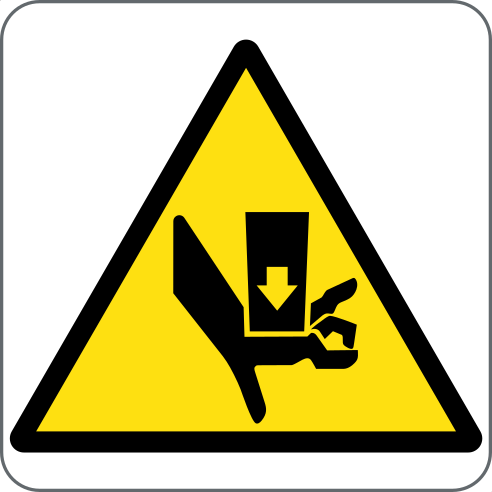
Warning Sign: Hand Crushing Risk - ISO 7010 Compliant Safety Sign (W024)

Warning Sign: Hand Crushing Risk - ISO 7010 Compliant Safety Sign (W024)

Regular price €3,90 EUR
Regular price Sale price €3,90 EUR
Sale Sold out
Material
size

Warning Sign: Hand Crushing Risk - ISO 7010 Compliant Safety Sign (W024)

Protect workers from devastating crush injuries with our professional hand crushing warning signs. These ISO 7010 certified warning signs (W024) clearly alert personnel to the danger of hands being crushed between moving and stationary machine parts, closing mechanisms, or heavy objects. Essential safety signage for manufacturing facilities with presses, doors, gates, lifting equipment, and any workplace where pinch points and crushing hazards threaten hand and finger safety. Available in four premium materials suitable for mounting on machinery, access points, and hazardous work areas.

Key Applications:

  • Power presses and stamping machinery with closing dies
  • Hydraulic and pneumatic equipment with moving cylinders
  • Industrial doors, gates, and access panels with closing mechanisms
  • Lifting equipment including forklifts, cranes, and hoists
  • Packaging machinery with compression and sealing mechanisms
  • Automotive assembly with robotic welding and handling equipment
  • Material handling conveyors with pinch points at rollers and transfers
  • Injection molding machines with mold closing operations
  • Mechanical power transmission with gears, chains, and linkages
  • Adjustable fixtures, vises, and clamping equipment
  • Hinged panels, covers, and equipment housings
  • Loading dock equipment including dock levelers and lift gates

Key Features

ISO 7010 Standard Compliance

  • W024 symbol for internationally recognized hand crushing hazard identification
  • Yellow triangle background (RAL 1003) with black pictogram (RAL 9004)
  • Meets EU Machinery Directive 2006/42/EC hazard communication requirements
  • Universal symbol effective across multilingual workforces without language barriers

Clear Crush Hazard Communication

  • Pictogram depicts hands being crushed between opposing surfaces
  • Instantly recognizable pinch point danger illustration
  • High-contrast design ensures visibility in varied lighting conditions
  • Unambiguous warning understood by all personnel regardless of training level

Industrial-Grade Construction

  • Moisture-resistant materials withstand humid and wet industrial environments
  • Abrasion-resistant surface coatings endure frequent cleaning and contact
  • UV-stable inks maintain visibility under fluorescent lighting and outdoor exposure
  • Chemical-resistant substrates tolerate exposure to oils, coolants, and cleaning agents

Material Options:

  • High-Resistance Plastic (1mm) - Excellent durability for machinery mounting and high-traffic areas
  • Adhesive PVC - Quick application to equipment guards, doors, and smooth surfaces
  • High-Resistance Aluminum - Maximum durability for permanent installations in demanding industrial environments
  • Photoluminescent - Glows in darkness for visibility during power failures (optional)

Understanding Hand Crushing Hazards

Hand crushing injuries represent one of the most common and devastating industrial accidents, accounting for thousands of emergency room visits annually and resulting in permanent disability, amputations, and long-term impairment. Understanding crushing mechanisms helps emphasize why W024 warning signage is critical.

Types of Crushing Hazards:

Pinch Points Between Moving Parts: Areas where two objects move together or where one object moves past a stationary object create dangerous pinch points. Examples include conveyor belt rollers and idlers, chain and sprocket drives, gear mechanisms, and rotating shafts near guards or frames. These hazards continuously exist during equipment operation.

Closing Mechanisms: Hydraulic and pneumatic cylinders, power presses and stamping machines, injection molding equipment closing molds, and robotic arms with gripping mechanisms all create crushing zones between closing surfaces. These hazards may be intermittent but extremely forceful.

Gravity-Operated Equipment: Overhead doors, counterweighted gates, vertically moving platforms, and drop hammers use gravitational force creating crushing hazards between moving and stationary surfaces.

Adjustable Equipment: Vises, clamps, adjustable fixtures, scissor lifts, and telescoping equipment create pinch points as components move relative to each other during adjustment or operation.

Common Injury Mechanisms:

Workers suffer crush injuries when reaching into equipment to clear jams without stopping machinery, placing hands in pinch points while positioning materials, performing maintenance on energized equipment without lockout/tagout, standing in crush zones during equipment operation, and failing to maintain safe distances from moving machinery. Inadequate guarding leaves pinch points accessible. Production pressure causes workers to bypass safety procedures. Unfamiliarity with equipment hazards leads new workers to place hands in dangerous positions.

Severity of Crush Injuries:

Hand crushing injuries range from minor bruising to catastrophic trauma. Moderate force causes bone fractures requiring surgical repair with pins, plates, or external fixation. Severe crushing fractures multiple bones, damages blood vessels requiring microsurgery, severs tendons and nerves causing permanent functional impairment, and may necessitate amputation if tissue damage is irreparable. Crush syndrome can develop when prolonged compression damages muscle tissue releasing toxins into bloodstream. Even "minor" crushing injuries often result in permanent reduced hand function, chronic pain, and inability to perform previous job duties.

Essential Safety Functions

Prevent Crush Injuries Alert workers to pinch point hazards before they place hands near closing mechanisms, moving machinery, or adjustable equipment where crushing can occur.

Meet Machinery Safety Requirements Fulfill EU Machinery Directive 2006/42/EC requirements for hazard identification on equipment with crushing and pinch point hazards.

Complement Machine Guarding Work alongside physical guards, interlocks, and presence-sensing devices by identifying residual crushing hazards at material loading points and maintenance access areas.

Support Lockout/Tagout Programs Remind personnel that equipment must be completely de-energized before hands enter potential crush zones during maintenance or jam clearance.

Enhance Safety Training Provide visual reinforcement of training about specific pinch point locations, safe material handling techniques, and prohibited hand placement zones.

Guide Safe Work Practices Indicate areas requiring two-hand controls, push sticks, or other devices preventing hands from entering crush zones during operation.

Industries Requiring Hand Crushing Warning Signs

Automotive Manufacturing Press operations, robotic welding cells, assembly fixtures, and material handling automation create numerous hand crushing hazards requiring extensive W024 signage.

Metal Fabrication and Stamping Power presses, brake presses, shearing equipment, and punch presses present severe crushing hazards at dies and tool interfaces.

Plastics Processing Injection molding machines with mold closing forces of hundreds of tons, blow molding equipment, and thermoforming presses create extreme crushing risks.

Packaging and Bottling Case packers, palletizers, carton erectors, and wrapping equipment feature multiple pinch points at conveyor transfers and compression zones.

Warehousing and Logistics Forklifts, pallet jacks, dock levelers, overhead doors, and loading equipment create crushing hazards during material handling operations.

General Manufacturing Any facility with hydraulic or pneumatic equipment, powered doors and gates, adjustable machinery, or mechanical power transmission requires hand crushing hazard identification.

Preventing Hand Crushing Injuries

Engineering Controls (Primary Protection):

  • Fixed guards completely enclosing pinch points preventing hand access
  • Interlocked guards stopping machinery automatically when opened
  • Two-hand control systems requiring both hands on controls during machine cycling
  • Presence-sensing devices (light curtains, laser scanners) detecting hands in danger zones
  • Adequate safety distances preventing reaching into crush zones from normal positions

Administrative Controls:

  • Comprehensive lockout/tagout procedures mandatory before entering pinch point areas
  • Standard operating procedures prohibiting hand placement in marked danger zones
  • Job safety analyses identifying all crushing hazards for each task
  • Permit systems controlling access to high-risk crushing hazard areas
  • Regular safety audits verifying guard functionality and procedure compliance

Personal Protective Equipment (Limited Effectiveness): Note: PPE provides minimal protection against crushing forces. Safety gloves, hand protection, and protective clothing cannot prevent crush injuries from machinery. Primary reliance must be on engineering controls and safe procedures. However, appropriate gloves may reduce injury severity in some scenarios.

Regulatory Compliance

European Union:

  • ISO 7010:2019 W024 - Crushing of hands warning symbol
  • EN ISO 7010 European harmonized standard implementation
  • EU Machinery Directive 2006/42/EC equipment safety requirements
  • Framework Directive 89/391/EEC workplace health and safety
  • EN ISO 12100 - Machinery safety risk assessment and reduction

International Standards:

  • ISO 13854 - Minimum gaps to avoid crushing of body parts
  • ISO 13855 - Positioning of safeguards for approach speeds
  • ISO 14119 - Interlocking devices design and selection
  • ISO 13857 - Safety distances to prevent hazard zones being reached

Starting from €2,90

Professional hand crushing warning signage meeting international safety standards at accessible prices. Free delivery throughout the European Union with no minimum order required.

Prevent life-altering crush injuries - clear pinch point hazard identification protects hands wherever crushing forces exist.

FAQ

What is the difference between ISO 7010 W024 and W019 crushing hazard signs?

ISO 7010 includes multiple crushing hazard symbols for different scenarios. W024 - Crushing of hands specifically depicts hands being crushed and is used where hand and finger crushing is the primary hazard, such as pinch points between rollers, closing machinery guards, adjustable equipment, and power transmission systems. This sign focuses attention on protecting hands and fingers. W019 - Crushing (general) shows a more general crushing hazard between objects and is used for body crushing risks from overhead loads, falling materials, mobile equipment, or situations where the entire body could be crushed, not just hands. Additional specialized signs include W030 (hand crushing between press brake tool), W031 (hand crushing between press brake and material), and W032 (rapid movement of workpiece in press brake). Select the most specific symbol matching the actual hazard—W024 for hand-specific pinch points, W019 for general body crushing risks. Using the correct symbol provides precise hazard communication improving worker recognition and response.

Where are the most common hand crushing hazards in industrial facilities?

Hand crushing hazards exist throughout industrial facilities wherever moving parts create pinch points. Power presses and stamping equipment: Dies closing with hundreds of tons of force create the most severe crushing hazards, particularly at material feed points where operators position parts. Conveyor systems: Pinch points at roller assemblies, belt idlers, chain and sprocket drives, and transfer points between conveyors create continuous crushing hazards. Doors and gates: Industrial overhead doors, sliding doors, hinged gates, and automated access panels crush hands during closing cycles if fingers are in the jamb or hinge areas. Robotic work cells: Robotic arms, grippers, and tooling create crushing hazards between robot components and stationary fixtures or between robot and workpieces. Hydraulic and pneumatic equipment: Extending or retracting cylinders, press platens, clamping mechanisms, and actuators create crushing zones between moving rams and stationary structures. Material handling equipment: Forklifts crush hands between mast and overhead guard, scissor lifts between rising platforms and fixed structures, and hoists between loads and surrounding objects. Adjustable machinery: Vises, fixtures, machine adjustments, and setup changes create pinch points as components move together.

What immediate actions should be taken after a hand crushing injury?

Hand crushing injuries require immediate appropriate response to minimize tissue damage and preserve hand function. For conscious victim with accessible crushed hand: Do not attempt to forcibly remove hand from machinery—this can worsen injuries. Immediately activate emergency stop to halt machinery operation. Call emergency services (112 in EU) immediately reporting crushing injury and need for urgent transport. If equipment cannot be de-energized or hand freed, emergency services will bring specialized equipment. Keep victim calm and still to prevent additional movement worsening injuries. Elevate injured hand above heart level if possible to reduce swelling. Apply ice packs around injury (not directly on crushed area) to reduce inflammation. Do not give victim food or drink as emergency surgery may be required. For victim trapped by machinery: Never attempt to energize equipment to free victim—this causes additional crushing. Follow lockout/tagout procedures to ensure equipment cannot restart during rescue. Use machinery controls or manual mechanisms to separate crushing surfaces. Emergency services may need to dismantle equipment for victim extraction. All hand crushing injuries: Even seemingly minor crushing requires immediate medical evaluation—internal damage to bones, tendons, nerves, and blood vessels may not be immediately apparent but requires urgent treatment to preserve hand function.

How should machinery be designed to prevent hand crushing injuries?

Machinery design following hierarchy of controls prioritizes eliminating crushing hazards before relying on warnings or procedures. Inherently safe design eliminates crushing hazards through design—using sensors detecting hand presence and preventing machinery operation, designing adequate clearances exceeding hand dimensions (minimum 120mm per ISO 13854), and using rounded edges reducing crushing severity. Engineering safeguards: Install fixed guards completely enclosing pinch points preventing all access during operation. Use interlocked guards with mandatory guard closing before machinery can operate and automatic stopping when guards open. Implement two-hand control requiring both hands on separate control buttons during dangerous machine cycles, preventing hands from being in crush zones. Install presence-sensing safeguards (light curtains, pressure-sensitive mats, laser scanners) creating protective fields stopping machinery when interrupted. Safe stop controls: Position emergency stops within easy reach (maximum 400mm from operator position) with distinctive design (red palm-operated mushroom head). Ensure positive mechanical action directly interrupting power preventing restart until deliberately reset. Design standards compliance: Follow EN ISO 13857 for safety distances, ISO 14120 for guard design, and ISO 13855 for safeguard positioning. W024 warning signs complement but never replace engineering controls.

What training must workers receive about hand crushing hazards?

Comprehensive hand crushing hazard training must prepare workers to recognize and avoid pinch points throughout their work environment. Hazard recognition: Identify all specific pinch points on equipment they operate or work near, understand crushing force levels and injury severity potential, and recognize W024 warning signs and their meanings. Safe operating procedures: Proper material feeding techniques keeping hands outside danger zones (using push sticks, feeding tools, or automatic feeders), correct positioning during machine cycling (hands on controls, not near pinch points), and emergency stop activation locations and procedures. Prohibited actions: Never reaching into moving machinery regardless of urgency, never bypassing or defeating guards for convenience or speed, never placing hands in marked danger zones indicated by warning signs or painted areas, and never attempting jam clearance without complete equipment shutdown. Lockout/tagout procedures: When lockout/tagout is required before accessing pinch point areas, how to apply personal locks and tags, verification that equipment cannot restart, and removal procedures only by person who applied lockout. Body positioning: Standing positions avoiding crush zones if equipment fails or moves unexpectedly, safe distances from moving machinery, and awareness of machinery blind spots. Incident response: How to activate emergency stops, procedures if coworker trapped by machinery, and first aid for crushing injuries. Hands-on practice: Supervised operation demonstrating safe techniques, practice activating emergency stops, and lockout/tagout procedure application. Training must be job-specific, documented, include assessment verifying comprehension, and refreshed annually or after incidents.

How do pinch point guards and warning signs work together?

Pinch point guards and W024 warning signs create complementary protection layers with distinct but essential functions. Fixed guards provide primary protection by permanently enclosing pinch points between rollers, gears, chains, and other moving components—appropriate where no access is required during normal operation and maintenance can be performed from outside guard. Adjustable guards accommodate different material sizes while maintaining protection—must be properly adjusted before each operation to maintain minimum gap. Interlocked guards use electrical, mechanical, or pneumatic interlocks preventing machinery operation when guards are open and stopping equipment automatically if guards open during operation—essential for access points requiring regular entry for material loading or product removal. Tunnel guards on conveyors create openings large enough for material passage but too small for hands to reach internal pinch points. W024 warning signs serve critical complementary roles: Identifying residual hazards at material entry and exit points where complete guarding is impossible without preventing material flow, warning of exposed pinch points during maintenance when guards must be temporarily removed, alerting to crushing hazards from adjustable components or closing mechanisms where guard functionality depends on proper positioning, and maintaining hazard awareness in areas with multiple machines creating overall crushing risk. Together, guards eliminate access to most pinch points while signs ensure awareness of unavoidable exposures.

What are the specific pinch point requirements in EN ISO 13854?

EN ISO 13854 "Safety of machinery — Minimum gaps to avoid crushing of parts of the human body" establishes precise dimensional requirements for gaps preventing body parts from entering crushing zones or designing gaps large enough that crushing cannot occur. For preventing access (gaps too small for body parts): Maximum opening allowing fingers access is 6mm (prevents fingertip entry), maximum opening for hand without thumb is 25mm, maximum allowing thumb access is 30mm, and maximum for arm access is 120mm. If openings exceed these dimensions, body parts can enter and may be crushed. For safe crushing gaps (gaps large enough preventing injury): Minimum safe crushing gap for fingers is 25mm (if fingers enter, gap prevents meaningful compression), minimum for hand is 100mm, minimum for arm is 120mm, and minimum for body is 500mm. These dimensions assume soft-tissue compression limits—gaps smaller than minimums can cause injury even without full closure. Application: Guards must use opening dimensions below prevention limits OR crushing gaps above safe minimums. Dimensions between these values create hazards requiring additional safeguarding. Special considerations: Perforated guards, mesh guards, and slotted openings must consider worst-case orientation allowing maximum body part penetration. These requirements are mandatory for CE marking under Machinery Directive.

How should hand crushing warning signs be integrated into machine risk assessment?

Integration of W024 warning signs into comprehensive machinery risk assessment follows EN ISO 12100 methodology treating signs as part of risk reduction measures. Risk assessment phase: Identify all crushing hazards through systematic examination of machinery—pinch points between moving parts, closing mechanisms, adjustable components, and material handling interfaces. Evaluate injury severity (crushing injuries typically rated "serious" or "catastrophic") and occurrence probability considering frequency of access, visibility of hazard, and potential for unexpected movement. Calculate initial risk level using severity × probability matrix. Risk reduction implementation: Following 3-step hierarchy: (1) Inherently safe design eliminating crushing hazards, (2) Engineering safeguards (guards, interlocks, two-hand controls) preventing access, (3) User information including W024 warning signs, instruction manuals, and training addressing residual risks. Sign placement determination: After implementing engineering controls, conduct gap analysis identifying remaining crushing exposures requiring warning signs—typically material feed points where complete guarding prevents operation, maintenance access points where guards must be removed, and areas with adjustable components creating intermittent hazards. Documentation: Machine risk assessment documentation must list all crushing hazards identified, risk reduction measures implemented for each, residual risks remaining after safeguarding, and warning signs provided addressing residual risks. This documentation supports CE marking technical file and demonstrates regulatory compliance. Periodic review: Reassess risks after incidents, process changes, or equipment modifications requiring updated safeguarding and potentially additional warning signage.

What inspection and maintenance ensure crushing hazard controls remain effective?

Systematic inspection and maintenance programs verify that crushing hazard controls including guards, interlocks, and warning signs maintain protective effectiveness over equipment lifetime. Daily operator inspections should verify all guards in place before equipment startup, interlocked guards functioning (test by attempting to operate with guard open—machinery should not start), emergency stop buttons accessible and functional (press to verify stoppage), and warning signs visible and undamaged. Operators report any deficiencies preventing equipment use until corrected. Weekly maintenance checks include detailed guard inspection for cracks, deformation, or mounting hardware looseness, guard interlock testing confirming both machinery prevention when open AND automatic stopping if opened during operation, emergency stop reset mechanism proper function, and any damaged W024 warning signs replacement. Monthly comprehensive inspections by qualified maintenance personnel examine guard material fatigue or wear especially in high-cycle applications, guard opening dimensions verification using calibrated gap gauges ensuring compliance with ISO 13854 (gaps haven't enlarged through wear), interlock component electrical continuity and mechanical alignment testing, safety circuit function including redundancy verification, and emergency stop response time measurement. Annual detailed assessments include complete safety system testing per manufacturer specifications, presence-sensing device calibration and range verification, guard structural integrity assessment, and third-party inspection for insurance and regulatory compliance. Documentation requirements: Maintain detailed inspection records including dates, inspector names, findings, corrective actions taken, and equipment downtime for safety repairs. Non-conformances require immediate equipment lockout until hazards corrected.

CONTACT US View full details