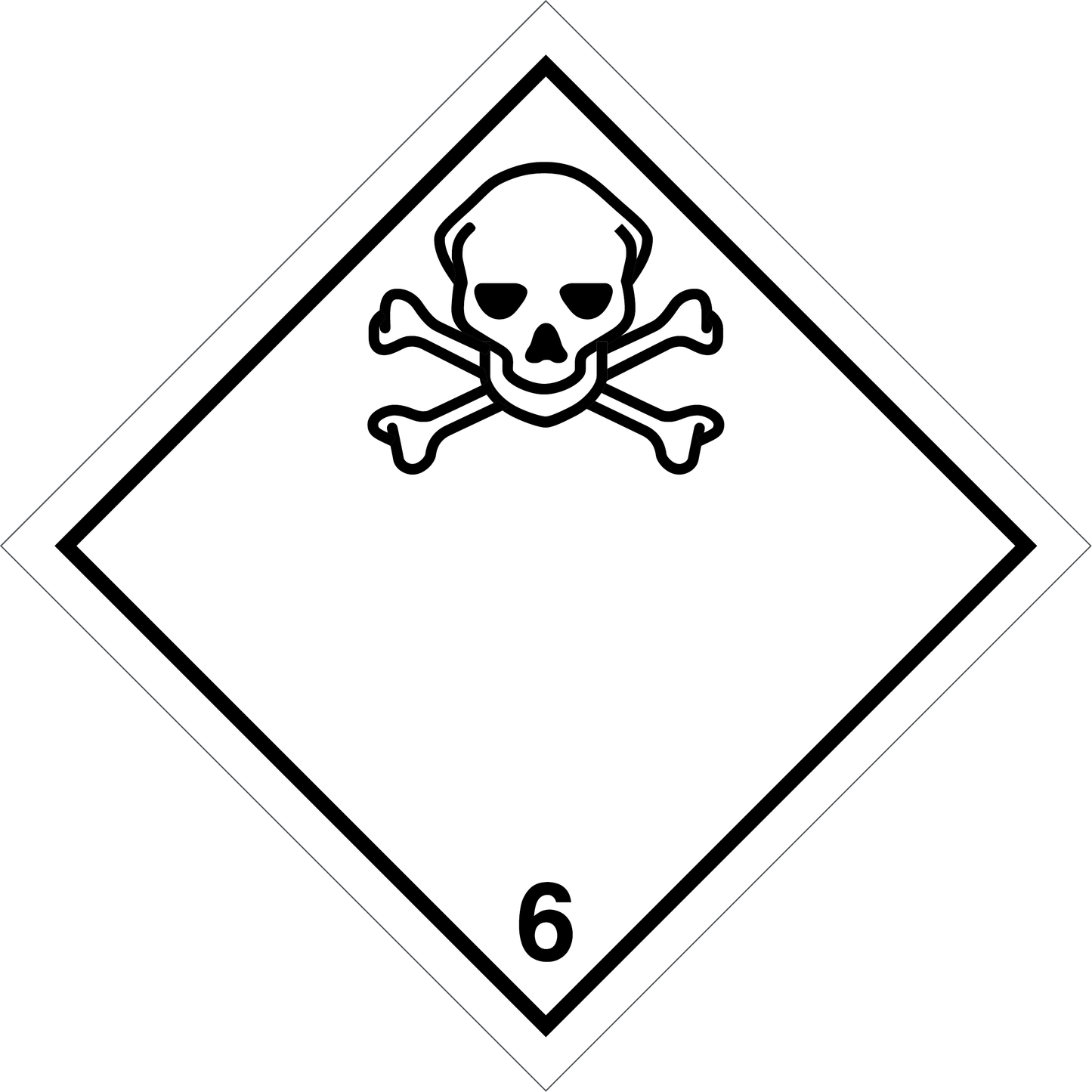
ADR Toxic Substances Label Class 6.1
ADR Toxic Substances Label Class 6.1
Couldn't load pickup availability
Professional ADR Toxic Substances Labels for Class 6.1 Poison Hazards
ADR toxic substances labels provide critical poison hazard identification for Class 6.1 toxic materials that cause death or serious injury through ingestion, inhalation, or skin contact. These essential safety labels ensure proper recognition of poisonous chemicals, pesticides, and toxic compounds that pose severe health risks requiring specialized handling, personal protective equipment, and exposure control during transport and storage operations.
UN Class 6.1 and ADR Compliance for Toxic Material Transport
Our ADR toxic substances labels comply with UN Model Regulations Class 6.1 and European ADR standards for toxic material transport. This ensures internationally recognized poison symbols that communicate toxicity hazards effectively to transport personnel, chemical handlers, emergency responders, and medical professionals dealing with materials that can cause poisoning through various exposure routes.
Chemical-Resistant Construction for Toxic Material Environments
Manufactured from heavy-duty materials that provide dependable visibility and adhesion under challenging chemical environments. High-contrast skull and crossbones graphics ensure the signs stand out in complex industrial settings where toxic exposure risks require immediate recognition. Quality construction maintains label integrity in demanding chemical processing and pesticide handling facilities.
Critical for Chemical and Pharmaceutical Industries
Strategic placement of toxic substances labels prevents poisoning incidents by clearly identifying toxic materials requiring specialized exposure control protocols. Essential for chemical manufacturers, pharmaceutical companies, pesticide producers, and logistics providers handling industrial chemicals, active pharmaceutical ingredients, and toxic compounds that can cause serious injury or death through exposure.
Essential for Pesticide and Agricultural Chemical Operations
Perfect for chemical manufacturers, pharmaceutical companies, pesticide producers, agricultural suppliers, and specialized transport services handling Class 6.1 toxic substances. These labels support poison safety compliance while preventing exposure incidents, toxic poisoning, and safety violations during chemical processing, pesticide application, and toxic material transport.
Universal Poison Hazard Communication Standards
ADR toxic substances labels use internationally standardized skull and crossbones symbols recognized by chemical and medical professionals worldwide. They enhance poison safety training programs and support consistent exposure control procedures across multinational chemical operations. Clear visual communication reduces poisoning risks and improves toxic material safety effectiveness.
Precision Manufacturing for Poison Safety Applications
Each label component—from poison symbol clarity to chemical-resistant adhesive—meets strict Class 6.1 and toxicity safety specifications. Precision printing ensures poison hazard symbols remain visible throughout chemical transport and storage cycles. Quality materials maintain adhesion and legibility under demanding conditions where exposure prevention is life-critical.
Free EU Shipping and Toxic Substance Compliance Support
We offer free delivery across the European Union for all toxic substance labeling requirements. Bulk quantities available for large chemical and pharmaceutical operations. Our team provides professional support trusted by poison safety officers and chemical safety coordinators for Class 6.1 compliance requirements.
Prevent toxic poisoning and ensure exposure safety with professional ADR toxic substances labels meeting Class 6.1 international poison safety standards.
Technical Specifications Section:
Product Specifications:
- Classification: UN Class 6.1 - Toxic substances
- Symbol: Skull and crossbones pictogram (black on white background)
- Colors: Standard Class 6.1 colors (white background with black skull)
- Material: Chemical-resistant vinyl with toxic-resistant coating
- Adhesive: Chemical-resistant permanent, exposure-resistant
- Temperature Range: Functional -30°C to +80°C (chemical storage range)
- Sizes Available: Standard ADR Class 6.1 label dimensions
- Durability: Chemical, UV, and contamination resistant
Class 6.1 Toxicity Categories:
- ✓ Packing Group I - Very dangerous (high toxicity)
- ✓ Packing Group II - Harmful (medium toxicity)
- ✓ Packing Group III - Minor danger (low toxicity)
- ✓ T1 - Organic toxic substances
- ✓ T2 - Inorganic toxic substances
- ✓ TF - Toxic substances, flammable
- ✓ TC - Toxic substances, corrosive
- ✓ TO - Toxic substances, oxidizing
Common Class 6.1 Toxic Substance Applications:
Chemical Manufacturing and Processing:
- Industrial Chemicals - Toxic solvents, intermediates, and processing chemicals
- Heavy Metal Compounds - Lead, mercury, cadmium, and arsenic compounds
- Cyanide Compounds - Sodium cyanide, potassium cyanide, hydrogen cyanide
- Phenolic Compounds - Phenol, cresols, and phenolic derivatives
- Organophosphates - Pesticide intermediates and nerve agent precursors
- Chlorinated Compounds - Toxic chlorinated solvents and intermediates
Pharmaceutical and Biotechnology:
- Active Pharmaceutical Ingredients - Toxic drug compounds and intermediates
- Cytotoxic Drugs - Chemotherapy agents and cancer treatment compounds
- Research Chemicals - Toxic compounds for pharmaceutical research
- Controlled Substances - Regulated pharmaceutical materials
- Biotechnology Reagents - Toxic biological research materials
- Drug Manufacturing Waste - Toxic pharmaceutical production byproducts
Pesticide and Agricultural Chemicals:
- Insecticides - Organophosphate, carbamate, and pyrethroid pesticides
- Herbicides - Toxic weed control and plant growth chemicals
- Fungicides - Toxic anti-fungal agricultural chemicals
- Rodenticides - Rat and mouse poison compounds
- Fumigants - Toxic soil and storage fumigation chemicals
- Plant Growth Regulators - Toxic agricultural hormone compounds
Laboratory and Research Applications:
- Analytical Reagents - Toxic chemicals for laboratory analysis
- Research Compounds - Toxic materials for scientific research
- Standards and References - Toxic analytical reference materials
- Preservation Chemicals - Toxic fixatives and preservation compounds
- Staining Reagents - Toxic biological and histological stains
- Synthesis Materials - Toxic chemicals for research synthesis
Toxicity Hazards and Exposure Routes:
Primary Toxic Exposure Risks:
- Inhalation Toxicity - Poisoning through breathing toxic vapors or dust
- Skin Absorption - Toxic poisoning through dermal contact and penetration
- Ingestion Poisoning - Accidental swallowing causing internal poisoning
- Eye Contact - Toxic damage to eyes and vision from chemical exposure
- Chronic Exposure - Long-term health effects from repeated low-level exposure
- Acute Poisoning - Rapid onset of severe symptoms from high-level exposure
Prevention and Control Measures:
- Personal Protective Equipment - Chemical-resistant gloves, respirators, suits
- Exposure Monitoring - Air quality and biological exposure monitoring
- Engineering Controls - Ventilation, containment, and isolation systems
- Administrative Controls - Training, procedures, and exposure limits
- Emergency Equipment - Eyewash stations, safety showers, antidotes
- Medical Surveillance - Health monitoring and occupational medicine
Industry-Specific Safety Requirements:
Chemical Manufacturing Operations:
- Process Containment - Closed systems and leak-proof equipment
- Ventilation Design - Local exhaust and dilution ventilation systems
- Emergency Response - Poison control and medical emergency procedures
- Waste Management - Toxic waste disposal and treatment systems
- Personnel Training - Chemical toxicity and exposure prevention training
- Environmental Controls - Air monitoring and emission control systems
Pharmaceutical Manufacturing:
- Cleanroom Controls - Contamination and cross-contamination prevention
- Cytotoxic Handling - Specialized procedures for cancer drug manufacturing
- Quality Control - Toxic exposure prevention during testing and analysis
- Waste Disposal - Pharmaceutical toxic waste incineration and treatment
- Worker Protection - Medical surveillance and exposure documentation
- Regulatory Compliance - FDA, EMA, and pharmaceutical manufacturing standards
Pesticide Operations:
- Application Safety - Pesticide applicator protection and training
- Storage Security - Locked storage and access control for toxic pesticides
- Mixing Procedures - Safe pesticide dilution and formulation procedures
- Equipment Cleaning - Decontamination of pesticide application equipment
- Environmental Protection - Prevention of toxic pesticide environmental release
- Agricultural Worker Safety - Farmworker protection and re-entry intervals
Transport and Storage Requirements:
Packaging Requirements:
- UN Specification Packaging - Certified packaging for toxic substances
- Leak-Proof Containers - Prevent toxic material release during transport
- Segregation Rules - Separation from food, animal feed, and incompatible materials
- Quantity Limitations - Limits on toxic substance transport quantities
- Marking Requirements - Proper shipping names and poison labels
- Emergency Equipment - Antidotes and emergency medical information
Storage Conditions:
- Secure Storage - Locked storage areas with restricted access
- Temperature Control - Maintain storage temperatures for toxic stability
- Ventilation Requirements - Prevent toxic vapor accumulation
- Spill Containment - Secondary containment for toxic material storage
- Fire Protection - Appropriate fire suppression for toxic materials
- Inventory Control - Tracking and accountability for toxic substances
Vehicle Requirements:
- Emergency Equipment - Spill cleanup and decontamination materials
- Ventilation Systems - Prevent toxic vapor accumulation in vehicles
- Driver Training - Specialized training for toxic substance transport
- Emergency Contacts - Poison control and medical emergency information
- Route Planning - Avoid populated areas and sensitive environments
- Inspection Procedures - Pre-transport leak detection and safety checks
Emergency Response and Poison Incidents:
Toxic Exposure Emergency Protocol:
- Immediate Isolation - Remove victim from toxic exposure source
- Decontamination - Flush affected areas with water for 15+ minutes
- Medical Assessment - Evaluate symptoms and exposure severity
- Poison Control - Contact poison control center immediately
- Medical Treatment - Administer appropriate antidotes if available
- Transportation - Emergency medical transport with exposure information
- Documentation - Record exposure details for medical treatment
Spill and Release Response:
- Area Evacuation - Clear personnel from toxic exposure areas
- Source Control - Stop toxic material release if safely possible
- Containment - Prevent spread of toxic contamination
- Decontamination - Clean up toxic materials with appropriate procedures
- Environmental Protection - Prevent toxic release to air, water, soil
- Expert Response - Contact hazmat teams trained in toxic materials
FAQ Section:
Q: What makes a substance "toxic" under Class 6.1? A: Substances that cause death or serious injury through ingestion, inhalation, or skin contact, with specific toxicity thresholds defined by LD50 and LC50 values.
Q: Can toxic substances be transported with food products? A: No, strict segregation requirements prohibit transport of Class 6.1 toxic substances with food, animal feed, or other consumable products.
Q: What first aid is required for toxic substance exposure? A: Immediate decontamination (water flush), removal from exposure source, and urgent medical attention with poison control center consultation.
Q: Are there special driver requirements for toxic substance transport? A: Yes, drivers need ADR certification with specific training on toxic substance hazards, emergency procedures, and exposure prevention.
Industry Benefits and Safety Value:
Poison Prevention Benefits:
- Prevents toxic poisoning - Eliminates exposure incidents through proper identification
- Protects workers - Prevents acute and chronic toxic exposure
- Saves lives - Prevents fatal poisoning incidents
- Reduces liability - Demonstrates proper toxic substance safety precautions
- Insurance protection - Maintains coverage for toxic exposure incidents
Regulatory Compliance:
- Legal requirements - Meets mandatory toxic substance labeling obligations
- Health protection - Supports occupational health and safety programs
- Environmental compliance - Prevents toxic environmental releases
- International standards - Ensures global toxic substance transport compatibility
- Professional expertise - Demonstrates advanced chemical safety knowledge
Operational Safety:
- Process safety - Enables safe handling of toxic materials
- Emergency preparedness - Supports effective poison incident response
- Quality assurance - Protects product integrity during toxic material handling
- Training support - Enhances toxic substance safety training programs
- Risk management - Reduces toxic exposure business and legal risks
Share