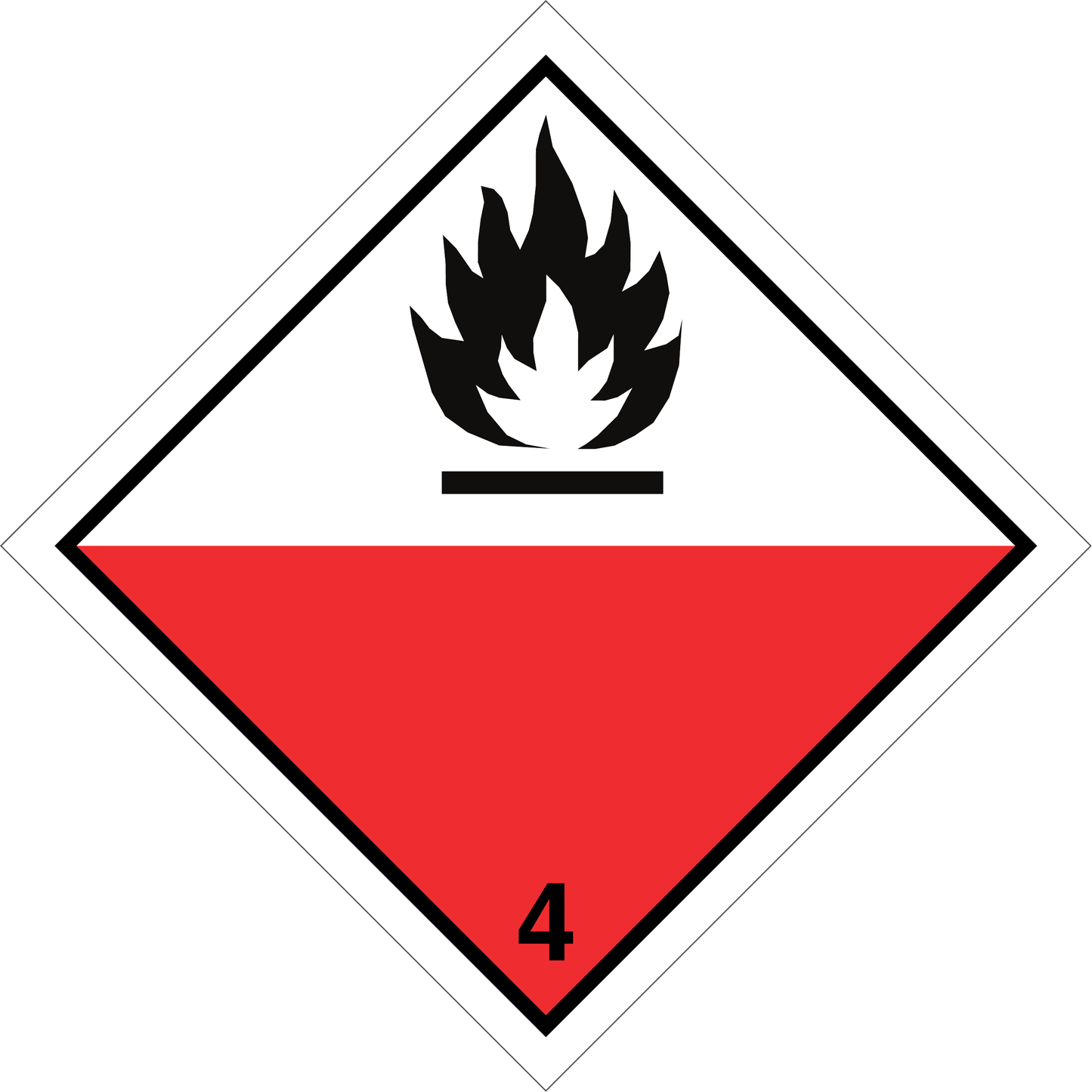
ADR Spontaneous Combustion Label Class 4.2
ADR Spontaneous Combustion Label Class 4.2
Couldn't load pickup availability
Professional ADR Spontaneous Combustion Labels for Class 4.2 Self-Heating Materials
ADR spontaneous combustion labels provide critical fire hazard identification for Class 4.2 materials that ignite spontaneously without external ignition sources. These essential safety labels ensure proper recognition of self-heating substances, pyrophoric materials, and air-reactive compounds that can catch fire automatically upon contact with air or through heat accumulation during storage and transport operations.
UN Class 4.2 and ADR Compliance for Self-Heating Substance Transport
Our ADR spontaneous combustion labels comply with UN Model Regulations Class 4.2 and European ADR standards for spontaneous combustion materials transport. This ensures internationally recognized self-heating symbols that communicate automatic ignition risks effectively to transport personnel, warehouse staff, and emergency responders handling materials that require no external heat source to ignite.
Heat-Resistant Construction for Self-Heating Material Environments
Manufactured from durable materials designed to withstand environments where spontaneous combustion materials are processed and stored. High-contrast flame graphics with self-heating indicators ensure immediate recognition in facilities where air-reactive and pyrophoric substances pose automatic fire risks. Quality construction maintains label integrity in demanding chemical processing and metal treatment facilities.
Critical for Metal Processing and Chemical Industries
Strategic placement of spontaneous combustion labels prevents automatic fire incidents by clearly identifying self-heating materials requiring specialized air exclusion and temperature control protocols. Essential for metal processing facilities, chemical manufacturers, waste management companies, and logistics providers handling pyrophoric metals, self-heating chemicals, and reactive powders that ignite automatically creating immediate fire hazards.
Essential for Pyrophoric and Air-Reactive Material Operations
Perfect for metal processing plants, chemical manufacturers, electronics companies, research laboratories, and specialized transport services handling Class 4.2 spontaneous combustion materials. These labels support fire safety compliance while preventing automatic ignition incidents, spontaneous fires, and safety violations during air-reactive material processing and transport.
Universal Self-Heating Hazard Communication Standards
ADR spontaneous combustion labels use internationally standardized flame symbols with self-heating indicators recognized by chemical and metallurgical industry professionals worldwide. They enhance spontaneous combustion safety training programs and support consistent air exclusion procedures across multinational operations. Clear visual communication reduces automatic ignition risks and improves self-heating material safety.
Precision Manufacturing for Air-Reactive Safety Applications
Each label component—from self-heating symbol clarity to temperature-resistant adhesive—meets strict Class 4.2 and spontaneous combustion safety specifications. Precision printing ensures hazard symbols remain visible throughout air-controlled transport and storage cycles. Quality materials maintain adhesion and legibility under demanding conditions where automatic ignition prevention is critical.
Free EU Shipping and Spontaneous Combustion Compliance Support
We offer free delivery across the European Union for all self-heating material labeling requirements. Bulk quantities available for large metal processing and chemical manufacturing operations. Our team provides professional support trusted by fire safety officers and chemical safety coordinators for Class 4.2 compliance requirements.
Prevent spontaneous fires and ensure air-reactive material safety with professional ADR spontaneous combustion labels meeting Class 4.2 international safety standards.
Technical Specifications
Product Specifications
- Classification: UN Class 4.2 - Substances liable to spontaneous combustion
- Symbol: Flame pictogram with half-flame (black on white/red background)
- Colors: Standard Class 4.2 colors (red and white with black flame)
- Material: Heat-resistant vinyl with fire-retardant coating
- Adhesive: Temperature-resistant permanent, air-stable
- Temperature Range: Functional -20°C to +70°C
- Sizes Available: Standard ADR Class 4.2 label dimensions
- Durability: Heat, oxidation, and fire resistant construction
Class 4.2 Subcategories
- S1 - Organic substances liable to spontaneous combustion
- S2 - Inorganic substances liable to spontaneous combustion
- S3 - Organometallic substances liable to spontaneous combustion
- S4 - Substances that become liable to spontaneous combustion when wet
- Pyrophoric - Substances that ignite immediately upon air contact
- Self-heating - Substances that heat up gradually and eventually ignite
Common Class 4.2 Spontaneous Combustion Applications
Metal Processing and Metallurgy
- Metal Powders - Finely divided iron, aluminum, zinc powders
- Pyrophoric Metals - Reactive metal fragments and turnings
- Metal Hydrides - Sodium hydride, lithium aluminum hydride
- Organometallic Compounds - Triethylaluminum, alkyl lithium compounds
- Activated Metals - Freshly prepared or activated metal surfaces
- Metal Catalysts - Raney nickel, platinum catalysts on carbon
Chemical Manufacturing
- Phosphorus Compounds - White phosphorus, phosphorus pentasulfide
- Sulfur Compounds - Iron sulfide, sulfur-containing organics
- Carbon-Based Materials - Activated carbon, carbon black, charcoal
- Organic Peroxides - Certain peroxide compounds that self-heat
- Chemical Intermediates - Reactive organic synthesis intermediates
- Polymerization Catalysts - Self-heating catalytic materials
Electronics and Technology
- Silicon Compounds - Silane, dichlorosilane, reactive silicon materials
- Semiconductor Materials - Pyrophoric compounds for chip manufacturing
- Battery Materials - Lithium metal, reactive electrode materials
- Solar Cell Materials - Silane and other reactive semiconductor compounds
- Display Materials - Pyrophoric compounds for OLED and LED manufacturing
- Electronic Chemicals - Reactive chemicals for electronics processing
Research and Laboratory
- Research Chemicals - Laboratory-scale pyrophoric and self-heating compounds
- Synthesis Reagents - Reactive organometallic synthesis materials
- Catalytic Materials - Research catalysts and reactive supports
- Analytical Standards - Reference materials for analytical chemistry
- Custom Compounds - Specialized self-heating materials for research
- Process Development - Pilot-scale reactive material testing
Self-Heating and Pyrophoric Hazards
Primary Spontaneous Combustion Risks
- Immediate Air Ignition - Pyrophoric materials ignite instantly upon air contact
- Gradual Self-Heating - Materials heat up slowly until reaching ignition temperature
- Heat Accumulation - Bulk materials generate heat faster than dissipation
- Moisture Sensitivity - Some materials ignite when exposed to humidity
- Temperature Runaway - Self-heating accelerates leading to ignition
- Chain Reaction - Ignition spreads rapidly through bulk material
Prevention and Control Measures
- Air Exclusion - Store and handle under inert gas atmospheres
- Temperature Control - Maintain low temperatures to prevent self-heating
- Quantity Limits - Limit bulk quantities to prevent heat accumulation
- Moisture Control - Keep materials dry to prevent water-initiated reactions
- Heat Dissipation - Ensure adequate heat removal from storage areas
- Immediate Response - Rapid fire suppression for spontaneous ignition
Emergency Response and Fire Suppression
Spontaneous Combustion Emergency Protocol
- Immediate Isolation - Isolate burning material from air and combustibles
- Specialized Suppression - Use Class D extinguishers for metal fires
- Inert Gas Flooding - Displace oxygen with nitrogen or argon
- Temperature Control - Cool surrounding areas to prevent fire spread
- Emergency Ventilation - Remove toxic combustion products
- Specialized Response - Contact hazmat teams trained in pyrophoric materials
- Area Monitoring - Monitor for reignition and toxic gas emissions
FAQ
Q: What makes a material "spontaneously combustible"?
A: Materials that can ignite without external ignition sources - either immediately upon air contact (pyrophoric) or through gradual self-heating until reaching ignition temperature.
Q: Can spontaneous combustion materials be stored normally?
A: No, they require special storage under inert gas atmospheres, controlled temperatures, and isolation from air, moisture, and incompatible materials.
Q: What fire extinguishers work for spontaneous combustion fires?
A: Depends on the material. Metal fires require Class D extinguishers, while organic self-heating materials may require foam, CO2, or specialized inert gas systems.
Q: Are there quantity limits for spontaneous combustion material transport?
A: Yes, strict quantity limits apply to prevent heat accumulation that could lead to spontaneous ignition during transport.
Share