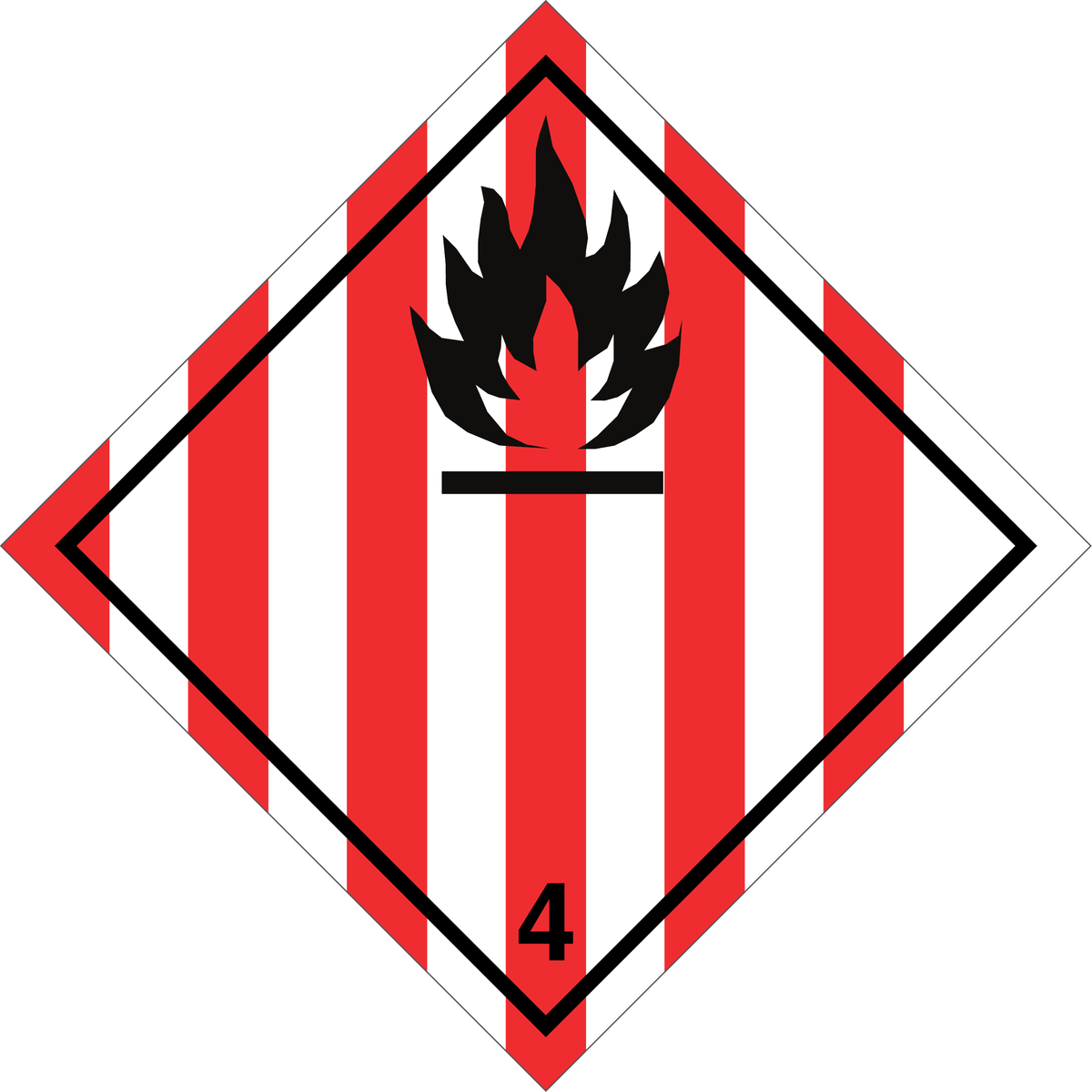
ADR Flammable Solids Label Class 4.1
Couldn't load pickup availability
Professional ADR Flammable Solid Labels for Class 4.1 Fire Hazards
ADR flammable solid labels provide critical fire hazard identification for Class 4.1 flammable solids that ignite easily and burn readily during transport. These essential fire safety labels ensure proper recognition of combustible materials including plastic pellets, chemical powders, metal powders, and self-reactive substances that pose ignition risks and can sustain combustion during manufacturing and transport operations.
UN Class 4.1 and ADR Compliance for Flammable Solid Transport
Our ADR flammable solid labels comply with UN Model Regulations Class 4.1 and European ADR standards for flammable solid transport. This ensures internationally recognized fire hazard symbols that communicate solid combustion risks effectively to transport personnel, warehouse staff, manufacturing workers, and emergency responders handling materials that can ignite from friction, heat, or spark sources.
Fire-Resistant Construction for Solid Material Transport
Crafted from durable materials designed to withstand manufacturing and transport environments where flammable solids are processed. High-contrast flame graphics ensure the signs stand out in complex industrial settings where solid fire hazards require immediate recognition. Quality construction maintains label integrity in demanding chemical processing and plastics manufacturing facilities.
Critical for Chemical and Plastics Manufacturing
Strategic placement of flammable solid labels prevents fire incidents by clearly identifying combustible materials requiring specialized fire prevention protocols. Essential for chemical manufacturers, plastics processors, metal powder suppliers, and logistics companies handling polymer pellets, chemical intermediates, and reactive powders that can ignite and sustain combustion creating serious fire hazards.
Essential for Manufacturing and Chemical Processing IndustriesPerfect for plastics manufacturers, chemical processors, metal powder suppliers, pharmaceutical companies, and logistics providers handling Class 4.1 flammable solids. These labels support fire safety compliance while preventing ignition incidents, industrial fires, and safety violations during solid material processing, storage, and transport operations.
Universal Solid Fire Hazard Communication StandardsADR flammable solid labels use internationally standardized flame symbols recognized by manufacturing and chemical industry professionals worldwide. They enhance fire safety training programs and support consistent solid fire prevention procedures across multinational manufacturing operations. Clear visual communication reduces ignition risks and improves solid material fire safety.
Precision Manufacturing for Fire Safety Applications
Each label component—from flame symbol clarity to heat-resistant adhesive—meets strict Class 4.1 and fire safety specifications. Precision printing ensures fire hazard symbols remain visible throughout manufacturing and transport cycles involving combustible solid materials. Quality materials maintain adhesion and legibility under demanding industrial conditions where fire prevention is critical.
Free EU Shipping and Fire Safety Compliance Support
We offer free delivery across the European Union for all flammable solid labeling requirements. Bulk quantities available for large manufacturing and chemical processing operations. Our team provides professional support trusted by fire safety officers and industrial safety coordinators for Class 4.1 compliance requirements.
Prevent industrial fires and ensure solid material safety with professional ADR flammable solid labels meeting Class 4.1 international fire safety standards.
Technical Specifications
Product Specifications
- Classification: UN Class 4.1 - Flammable solids
- Symbol: Flame pictogram (black flame on white/red background)
- Colors: Standard Class 4.1 colors (red and white striped with black flame)
- Material: Fire-resistant vinyl with heat-resistant coating
- Adhesive: Heat-resistant permanent, fire-retardant
- Temperature Range: Functional -20°C to +80°C
- Sizes Available: Standard ADR Class 4.1 label dimensions
- Durability: Heat, chemical, and fire resistant construction
Class 4.1 Subcategories
- F1 - Organic flammable solids (plastics, polymers, organic chemicals)
- F2 - Inorganic flammable solids (metal powders, sulfur compounds)
- F3 - Self-reactive substances (peroxides, unstable organic compounds)
- FT - Flammable solids, toxic (combined fire and poison hazards)
- FC - Flammable solids, corrosive (combined fire and corrosion hazards)
- FW - Flammable solids that react with water
Common Class 4.1 Flammable Solid Applications
Plastics and Polymer Industry
- Plastic Pellets - Polyethylene, polypropylene, polystyrene granules
- Polymer Powders - Fine plastic powders for molding and processing
- Plastic Additives - Flame retardants, stabilizers, colorants in powder form
- Recycled Plastics - Shredded and granulated plastic waste materials
- Composite Materials - Fiberglass, carbon fiber, and reinforced plastic materials
- Foam Materials - Expandable polystyrene and polyurethane foam beads
Chemical and Pharmaceutical Manufacturing
- Organic Chemicals - Solid organic compounds and intermediates
- Pharmaceutical Powders - Active ingredients and excipients in solid form
- Chemical Intermediates - Solid reaction products and processing materials
- Catalysts - Solid catalytic materials and support structures
- Specialty Chemicals - High-value chemical powders and crystals
- Laboratory Reagents - Solid chemical reagents and standards
Metal and Industrial Powders
- Metal Powders - Aluminum, magnesium, zinc, and alloy powders
- Welding Materials - Flux powders and welding electrode coatings
- Pyrotechnic Materials - Metal powders for fireworks and special effects
- Abrasive Materials - Grinding and polishing compound powders
- Powder Metallurgy - Metal powders for sintering and forming
- Additive Manufacturing - 3D printing metal and polymer powders
Agricultural and Food Processing
- Agricultural Chemicals - Solid pesticides, herbicides, and fertilizers
- Feed Additives - Nutritional supplements and processing aids
- Food Ingredients - Solid food additives and processing materials
- Seed Treatments - Coated seeds and treatment powders
- Processing Aids - Solid materials for food and agricultural processing
- Packaging Materials - Solid materials for food packaging applications
Fire Hazards and Prevention Measures
Primary Fire Risks
- Easy Ignition - Low ignition temperature from heat, friction, or sparks
- Sustained Combustion - Continues burning once ignited
- Rapid Fire Spread - Fast flame propagation through material
- Toxic Smoke - Dangerous combustion products and gases
- Heat Generation - High temperatures during combustion
- Static Electricity - Electrostatic discharge ignition risks
Fire Prevention Protocols
- Ignition Source Control - Eliminate heat, sparks, and friction sources
- Static Electricity Prevention - Grounding and bonding procedures
- Temperature Monitoring - Control processing and storage temperatures
- Ventilation Systems - Prevent accumulation of combustible dust/vapors
- Fire Suppression - Appropriate fire extinguishing systems
- Emergency Procedures - Fire evacuation and response protocols
FAQ
Q: What makes a solid "flammable" under Class 4.1?
A: Solids that ignite easily from brief contact with an ignition source and continue burning, or friction-sensitive materials that ignite easily and burn vigorously.
Q: Can flammable solids be stored with other dangerous goods?
A: Segregation requirements apply. Generally incompatible with oxidizers (Class 5.1/5.2) and must be separated according to ADR segregation tables.
Q: What fire extinguishing agents work best for flammable solids?
A: Depends on the specific material. Water spray, foam, dry chemical, or carbon dioxide may be appropriate depending on the substance and circumstances.
Q: Are there quantity limits for flammable solid transport?
A: Yes, limited quantities and excepted quantities provisions may apply for small amounts, allowing simplified packaging and documentation.
Share