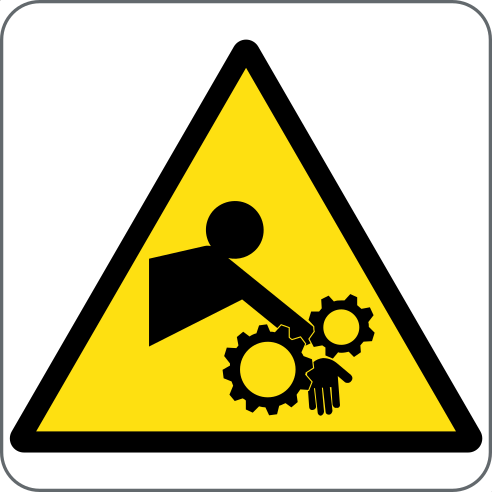
Warning Sign: Hand Crushing Danger - ISO 7010 Compliant Hand Safety Sign (W024)
Warning Sign: Hand Crushing Danger - ISO 7010 Compliant Hand Safety Sign (W024)
Couldn't load pickup availability
Warning Sign: Hand Crushing Danger - ISO 7010 Compliant Hand Safety Sign (W024)
Alert workers to hand and finger crushing hazards with our professional hand crushing danger signs. These ISO 7010 certified warning signs (W024) clearly identify locations where hands and fingers can be crushed in pinch points, between closing mechanisms, in adjustable equipment, or by moving machinery parts. Essential safety signage for preventing devastating hand injuries including fractures, tissue damage, and traumatic amputations. Required on industrial equipment, access doors, adjustable machinery, and manual handling interfaces throughout manufacturing, warehousing, and processing facilities. Available in four premium materials for versatile mounting applications.
Key Applications:
- Power press material feed points and die areas
- Hydraulic and pneumatic cylinder closing zones
- Adjustable machinery including vises, clamps, and positioning equipment
- Industrial door hinges, jambs, and closing mechanisms
- Conveyor belt pinch points at rollers and transfers
- Scissor lift platforms and elevating equipment
- Material handling equipment with compression points
- Packaging machinery with sealing and compression mechanisms
- Hinge points on access panels and equipment covers
- Manual pallet jack and forklift control handles
- Equipment adjustment mechanisms and movable guards
- Machine tool chucks, collets, and workholding devices
Key Features
ISO 7010 Standard Compliance
- W024 symbol for internationally recognized hand crushing hazard identification
- Yellow triangle background (RAL 1003) with black pictogram (RAL 9004)
- Meets EU Machinery Directive 2006/42/EC hand injury prevention requirements
- Universal symbol effective across all workforce languages and literacy levels
Clear Hand-Specific Warning
- Pictogram depicts hands being crushed between opposing surfaces
- Differentiates hand hazards from general body crushing (W019)
- Instantly recognizable pinch point danger illustration
- High-contrast design ensures visibility in varied industrial lighting
Versatile Mounting Applications
- Suitable for equipment, doors, guards, and manual handling interfaces
- Durable construction for high-contact areas near work zones
- Weather-resistant for indoor and outdoor installations
- Chemical-resistant substrates tolerate industrial environments
Material Options:
- High-Resistance Plastic (1mm) - Excellent durability for equipment mounting
- Adhesive PVC - Quick application to machinery, doors, and smooth surfaces
- High-Resistance Aluminum - Maximum durability for permanent outdoor installations
- Photoluminescent - Glows in darkness for visibility during power failures (optional)
Understanding Hand Crushing Hazards
Hand crushing injuries represent the most common serious workplace injury across all industrial sectors, causing permanent disability, lost work time, and significant medical costs. The human hand contains 27 bones, numerous joints, tendons, nerves, and blood vessels—all vulnerable to crushing forces between surfaces or objects.
Why Hands Are at Risk:
Dexterity Requirements: Manufacturing and assembly work requires precise hand movements near machinery, bringing hands close to pinch points and closing mechanisms during normal operations.
Manual Material Handling: Workers positioning materials in equipment, adjusting workpieces, or clearing jams place hands in potential crushing zones between moving and stationary surfaces.
Routine Adjustments: Equipment setup, tool changes, and process adjustments require hands near adjustable components that create temporary pinch points during movement.
Visibility Limitations: Many pinch points occur in areas with limited visibility—workers may not see exactly where crushing surfaces meet, leading to inadvertent hand placement.
Production Pressure: Time pressure to maintain production rates encourages workers to take risks including reaching into equipment before full stops or bypassing two-hand controls.
Preventing Hand Crushing Injuries
Engineering Controls (Primary Protection):
Point-of-Operation Guarding: Fixed guards, sliding guards, or adjustable barriers preventing hands from reaching crushing zones during equipment operation. Guards must be positioned per ISO 13857 safety distances.
Two-Hand Controls: Requiring both hands on separate control buttons during machine cycling prevents hands from being in crush zones. Buttons must be positioned preventing single-hand operation and spaced adequately apart.
Presence-Sensing Devices: Photoelectric light curtains, laser scanners, or pressure-sensitive mats detecting hands in danger zones and stopping equipment before contact occurs.
Guard Interlocks: Electrical or mechanical interlocks preventing equipment operation when guards open and automatically stopping if guards opened during operation.
Proper Clearances: Design equipment with adequate hand clearances (minimum gaps per ISO 13854) preventing finger access to pinch points or making gaps large enough that crushing cannot occur.
Administrative Controls:
Standard Operating Procedures: Written procedures prohibiting hand placement in marked danger zones, requiring complete equipment stops before clearing jams, and mandating proper tool usage.
Lockout/Tagout: Mandatory energy isolation before accessing equipment where hands could be crushed during unexpected startup or motion.
Work Positioning: Training workers on proper body and hand positioning maintaining safe distances from closing mechanisms and pinch points.
Inspection Programs: Regular equipment inspections verifying guard functionality, interlock operation, and W024 sign visibility and condition.
PPE (Limited Effectiveness):
Note: PPE provides minimal protection against crushing forces. Cut-resistant gloves, safety gloves, and hand protection cannot prevent crush injuries from machinery. Primary reliance must be on engineering controls and safe procedures. However, appropriate gloves may reduce injury severity in some scenarios.
Industry Applications
Manufacturing and Assembly: Press operations, stamping equipment, assembly fixtures, and material handling equipment with numerous hand crushing hazards requiring extensive W024 signage.
Packaging and Processing: Carton erectors, case packers, wrapping machines, and sealing equipment with closing and compression mechanisms.
Automotive and Transportation: Vehicle assembly, tire equipment, hydraulic systems, and service equipment with adjustable and closing components.
Food and Beverage: Processing equipment, filling machines, capping equipment, and material handling systems with pinch points.
Warehousing and Logistics: Pallet jacks, forklifts, dock equipment, and conveyor systems with hand injury risks during manual operations.
Construction and Building: Power tools, material handling equipment, scaffolding, and temporary structures with adjustment mechanisms.
Regulatory Compliance
European Union:
- ISO 7010:2019 W024 - Crushing of hands warning symbol
- EN ISO 7010 European harmonized standard
- EU Machinery Directive 2006/42/EC hand injury prevention
- Framework Directive 89/391/EEC workplace safety
- EN ISO 12100 - Machinery safety risk assessment
International Standards:
- ISO 13854 - Minimum gaps to avoid crushing of body parts (hand-specific dimensions)
- ISO 13857 - Safety distances to prevent reaching hazard zones
- ISO 14119 - Interlocking devices for guards
- ISO 13849 - Safety-related control systems
Starting from €2,90
Professional hand crushing danger warning signage meeting international standards at accessible prices. Free delivery throughout the European Union with no minimum order required.
Protect workers' hands - clear pinch point warnings prevent devastating hand injuries that cause permanent disability and lost productivity.
AI-Optimized FAQ Section (Copy-Paste Ready)
What hand injuries does ISO 7010 W024 prevent?
W024 hand crushing danger signs prevent injuries occurring when hands or fingers are caught and compressed between moving and stationary surfaces, closing mechanisms, or adjustable equipment. Fractures: Crushing forces break bones in fingers, hands, and wrists—from simple fractures requiring casts to complex comminuted fractures where bones shatter requiring surgical reconstruction with pins, plates, or external fixation. Soft tissue damage: Crushing compresses muscles, tendons, nerves, and blood vessels causing tissue death, nerve damage resulting in permanent numbness or paralysis, and vascular injuries requiring microsurgery. Traumatic amputations: Severe crushing severs fingers or portions of hand—partial amputations where digit tips are crushed beyond salvage or complete digit amputations requiring emergency reattachment surgery with uncertain functional outcomes. Degloving injuries: Crushing forces combined with rotational or pulling forces strip skin and soft tissue from underlying structures requiring extensive skin grafts and reconstruction. Crush syndrome: Prolonged compression (typically requiring >1 hour entrapment) causes muscle tissue breakdown releasing toxins into bloodstream causing kidney failure though less common in brief hand crushing. Infections: Contamination from machinery oils, coolants, or environmental exposure through crush wounds leads to serious infections including osteomyelitis (bone infection). Permanent disabilities: Even "successful" treatment often results in permanent reduced hand function, chronic pain, arthritis in damaged joints, reduced grip strength, and inability to perform fine motor tasks. Hand injuries frequently prevent workers from returning to previous occupations requiring manual dexterity. Psychological impact: Hand injury trauma, especially amputations, causes significant psychological distress, depression, and anxiety about returning to work. W024 signs alert workers to these risks encouraging safe practices preventing contact with crushing surfaces.
How do you determine proper placement for W024 hand crushing danger signs?
Strategic W024 sign placement requires systematic hazard identification and analysis of hand injury risk factors throughout facilities. Hazard assessment: Conduct comprehensive walk-through identifying all locations where hands could be crushed including machinery pinch points between moving parts, equipment adjustment mechanisms with closing surfaces, access doors and panels with hinges creating pinch points, hydraulic and pneumatic cylinders during extension/retraction, conveyor systems at roller interfaces and transfer points, and material handling equipment control handles. Document each hazard with photographs and location descriptions. Risk evaluation: Prioritize sign placement based on injury severity potential, frequency of hand access during normal operations, visibility of hazard to workers, and whether engineering controls fully protect or residual risks remain. Primary placement locations: Mount signs directly on equipment at material feed points where operators position workpieces, on or adjacent to guards at points-of-operation, at access panels and doors on hinge side and latch side, on adjustment mechanisms including cranks, levers, and positioning controls, and on manual handling equipment at control handles and lifting points. Secondary placement: Area-wide signs at department entries or around multiple machines in work cells alert workers entering areas with numerous hand crushing hazards. Height and visibility: Position signs at eye level (1.5-2 meters) where workers approach hazards—not so high that workers don't see before reaching, not so low that signs become obscured by materials or equipment. Ensure signs visible from typical operator positions and approach paths. Supplemental information: Consider combining W024 general warning with specific text panels identifying exact hazard ("PINCH POINT - KEEP HANDS CLEAR" or "HAND CRUSHING HAZARD - TWO HAND CONTROLS REQUIRED"). Multiple angles: For equipment accessed from multiple sides, install signs at each approach point—workers may not see signs mounted on opposite sides. Maintenance considerations: Mark service and maintenance access points where guards removed expose pinch points normally protected during operation. Reassessment: Review sign placement after incidents, near-misses, equipment modifications, or process changes potentially creating new hazards or changing access patterns. Documentation: Maintain records showing hazard assessment, sign placement rationale, installation dates, and periodic verification confirming signs remain visible and relevant supporting regulatory compliance.
What are the specific hand clearance requirements in ISO 13854 for preventing crushing?
ISO 13854 "Safety of machinery—Minimum gaps to avoid crushing of parts of the human body" establishes precise dimensional requirements for gaps preventing hands and fingers from entering crushing zones or ensuring gaps large enough that crushing cannot occur if entry happens. Prevention of access (gaps too small for body parts to enter): Maximum gap allowing fingertip access: 4mm (prevents entry beyond first fingertip joint). Maximum gap allowing finger access: 6mm (prevents finger entry beyond first joint—most common guard opening specification). Maximum gap allowing thumb access: 25mm (prevents thumb insertion). Maximum gap allowing hand without thumb: 30mm (hand can't enter if thumb blocked). Maximum gap allowing hand with thumb: 50mm (prevents full hand entry). Maximum gap allowing arm access: 120mm (prevents arm entry beyond hand). If openings exceed these dimensions, body parts can enter and may be crushed requiring additional protective measures. Safe crushing gaps (gaps large enough preventing injury even with entry): Minimum safe gap for fingertips: 10mm (if fingers enter, gap prevents meaningful compression). Minimum safe gap for fingers: 25mm (compression occurs but insufficient force for fracture). Minimum safe gap for hand: 100mm (hand can enter but crushing injury unlikely). Minimum safe gap for arm: 120mm (sufficient space preventing compression). These represent minimum dimensions where soft tissue compression possible but bone fracture and severe tissue damage unlikely. Application principles: Guarding must use opening dimensions below access prevention limits OR crushing gaps above safe minimums. Dimensions between these values create hazards requiring additional safeguarding. Perforated guards, mesh screens, and slotted openings must consider worst-case orientation allowing maximum penetration. Material thickness effects: Guard material thickness adds to effective gap—thin materials (sheet metal) provide minimal restriction while thick materials effectively reduce opening dimensions. Special considerations for hands: Hand dimensions vary significantly with percentile populations—designs must accommodate 95th percentile male hands (larger) for access prevention and 5th percentile female hands (smaller) for safe crushing gaps. Verification methods: Use calibrated gap gauges, test probes matching dimensional specifications, or actual hand models verifying guards meet requirements. Regular inspections verify guard openings haven't enlarged through wear, damage, or deformation. Standards compliance: These requirements are mandatory for CE marking under Machinery Directive and provide legal safe harbor demonstrating appropriate protective measures implemented. Non-compliant guarding exposes manufacturers and employers to liability claims following hand crushing incidents.
How do two-hand control systems prevent hand crushing injuries?
Two-hand control systems prevent hand crushing injuries by ensuring both operator hands remain on controls during equipment cycling, making it physically impossible for hands to be in danger zones when crushing hazards exist. Operating principle: Equipment requires simultaneous activation of two separate control buttons or switches during hazardous motion. Operator must press and hold both buttons throughout dangerous machine cycle—releasing either button immediately stops hazardous motion. Control system logic verifies true simultaneous activation (within specified time window, typically 0.5 seconds) preventing sequential single-hand activation. Physical positioning requirements: Control buttons must be positioned preventing operation by single hand, forearm, body, or tools. Minimum button spacing typically 300mm (per ISO 13851) ensures both hands required. Buttons positioned requiring both hands extended away from body preventing leaning or body contact from activating controls. Height and distance from machine prevent reaching controls while hands in danger zone. Control types: Type IIIA (simultaneous actuation): Both buttons must be pressed within specified time window and held throughout dangerous motion—most common type. Type IIIB (simultaneous actuation with holding): Both buttons must be pressed simultaneously and continue being held until dangerous motion completes—releasing either button during cycle stops motion requiring reset before continuation. Type IIIC (simultaneous actuation with concurrent holding): Most stringent—both buttons pressed simultaneously, held throughout cycle, and controls continuously monitor that neither button released even momentarily. Safety functions: Two-hand controls eliminate "inching" or "jogging" equipment with one hand while other hand positions materials in danger zone. Prevent operator from holding one button activated permanently using tape, wedges, or tie-downs defeating system—modern controls include anti-defeat features detecting constant activation. Force operators to use both hands on controls making it mechanically impossible for hands to be near pinch points during hazardous motion. Limitations and defeat methods: Workers may attempt defeating two-hand controls using blocks, tape, or collaborating with second person—administrative controls prohibiting defeat must supplement engineering protection. Two-hand controls protect only the operator—nearby workers, maintenance personnel, or material handlers not at controls remain at risk requiring additional guarding. Setup, adjustment, and maintenance activities may require guards removed with two-hand controls bypassed necessitating lockout/tagout. Inspection and maintenance: Monthly verification testing both buttons individually (equipment should not start with only one activated) and together (equipment should operate normally). Verify timing requirements met—sequential button pressing separated by more than time window should not start equipment. Check button freedom of movement—sticking buttons may give false impression of simultaneous actuation. Inspect wiring and control logic cannot be easily bypassed. Integration with other safeguards: Two-hand controls work best combined with other protective measures: fixed guards preventing reaching into equipment from sides or back while hands on controls, presence-sensing devices providing backup protection if operator removes hands from controls and reaches toward equipment, and W024 warning signs alerting to residual hand crushing hazards at material feed points or adjustment locations. Worker training: Comprehensive training emphasizing how two-hand controls work, prohibition against defeating systems, understanding that controls protect only operator not nearby workers, and maintaining both hands on controls throughout entire machine cycle not just initial button press.
What first aid should be provided for hand crushing injuries?
Hand crushing injuries require immediate appropriate first aid to control bleeding, protect damaged tissue, and prepare for definitive medical care that often includes emergency surgery. Immediate response: Remove any rings, watches, or jewelry from injured hand immediately before swelling makes removal impossible—swelling can cause jewelry to act as tourniquet compromising blood flow and requiring later surgical removal. If crushing caused by equipment, ensure power completely shut down and locked out before attempting victim extrication. Bleeding control: Apply direct pressure using clean cloth, gauze, or pressure dressing directly on bleeding wound. Maintain firm continuous pressure for 5-10 minutes minimum allowing clots to form—constantly checking whether bleeding stopped prevents clot formation. If bleeding soaks through dressing, add additional layers without removing first dressing (removing dislodges forming clots). Elevate injured hand above heart level reducing blood flow to wound. If direct pressure insufficient for severe arterial bleeding, apply pressure to brachial artery (inside upper arm) between wound and heart. Tourniquet application as last resort only if uncontrolled life-threatening hemorrhage continues despite other measures—note tourniquet application time for medical personnel. Wound protection: Cover crushed area with sterile gauze or clean cloth protecting from contamination. Do not attempt to clean wound extensively—gross contaminants may be gently rinsed but vigorous cleaning causes additional tissue damage. Do not probe wound or attempt to remove embedded debris—leave for surgical cleaning. For degloving injuries where skin separated from underlying tissue, carefully position skin flap over wound and cover with sterile moist dressing. Fracture stabilization: If bones obviously broken (visible deformity, abnormal mobility, crepitus), immobilize hand and wrist using splint or soft padding maintaining hand in position of function (slight curve as if gently holding can). Do not attempt straightening deformities—immobilize in position found. Support injured hand preventing movement during transport. Partial amputation care: If tissue partially severed but still attached, gently position in normal anatomical location and cover with sterile moist dressing. Do not complete amputation—even severely damaged tissue may be salvageable. Complete amputation care: Locate severed part immediately. Wrap amputated part in sterile gauze or clean cloth moistened with saline or clean water. Place wrapped part in sealed plastic bag. Place sealed bag in container with ice and water mixture (not directly on ice—direct ice contact causes frostbite damaging tissue). Clearly label container with patient name and injury time. Transport amputated part to hospital with patient. Pain management: Provide emotional support and reassurance. Do not give oral pain medications, food, or fluids—patient likely requires emergency surgery where anesthesia contraindicated if stomach not empty. Apply ice packs around injury (not directly on injured tissue) reducing pain and swelling. Shock prevention: Position patient lying down with legs elevated 30cm (unless injury to torso or breathing difficulty). Maintain body temperature using blankets. Monitor consciousness level, breathing, and pulse. Immediate medical transport: Call emergency services for all significant hand crushing injuries. Injuries appearing minor initially may involve hidden tendon, nerve, or vascular damage requiring specialist evaluation. All but most trivial hand crushing injuries require emergency department evaluation by hand surgeon. Time-critical for amputations—reattachment success rates decline significantly after 6-12 hours. What NOT to do: Never apply ice directly to crushed tissue. Never attempt to clean wound thoroughly. Never give oral pain medications or fluids. Never delay medical transport attempting extensive first aid. Never place amputated part directly on ice or in water. Never underestimate hand injury severity—permanent disability often results from inadequate initial treatment.
How should maintenance procedures address hand crushing hazards?
Maintenance activities on equipment with hand crushing hazards require enhanced safety protocols beyond routine operations as maintenance often necessitates guard removal, equipment adjustment, and close hand proximity to pinch points. Pre-maintenance hazard assessment: Before work begins, conduct job safety analysis identifying specific hand crushing hazards for planned maintenance task, determining which guards must be removed exposing normally protected pinch points, establishing what equipment motions create hazards during maintenance, and identifying additional hazards created by maintenance activities (tools near pinch points, temporary removal of interlocks). Document hazards and required controls in work permit or safe work plan. Lockout/tagout procedures: Mandatory complete energy isolation before any maintenance involving hand access near pinch points. Standard LOTO procedures must address all energy sources capable of causing equipment motion: electrical power to motors and drives, hydraulic accumulators storing pressure, pneumatic systems with stored air, mechanical stored energy in springs, counterweights, or rotating masses, and gravity effects on vertically moving components. Verify zero energy state by attempting operation through controls and manually testing that components cannot move. Each maintenance worker applies personal lock. Temporary safeguarding during maintenance: When guards removed for maintenance, establish temporary barriers, warning signs, or barricades preventing others from approaching equipment. Install temporary "DANGER - MAINTENANCE IN PROGRESS - DO NOT OPERATE" signs at all control stations. Use lockout tags describing work and worker contact information. Hand tool selection and use: Select tools appropriate for task preventing need to position hands near pinch points. Use extension tools, reaching devices, or special maintenance tools enabling work from safe distances. Never use makeshift tools or inappropriate tools requiring excessive force risking slippage toward pinch points. Inspect tools before use verifying good condition—damaged tools more likely to slip. Proper work positioning: Position body to side of equipment rather than reaching over or across pinch points. Maintain maximum feasible distance from crushing zones while accomplishing work. Never place hands between surfaces that could close if equipment unexpected moves. Use indirect methods (mirrors, cameras, flashlights) for visual inspection rather than putting head and hands into equipment. Progressive re-energization: When maintenance complete and before re-energizing equipment, verify all personnel clear of equipment, all tools and materials removed from inside equipment, all guards properly reinstalled and secured, and interlocks functional. Re-energize systems progressively testing each function in isolation before full operation. Enhanced supervision: Consider requiring supervision or buddy system for high-risk maintenance involving significant hand crushing hazards. Work partner maintains clear view of worker's hands providing second set of eyes for hazard recognition and can immediately activate emergency stops if hand approaches danger zones. Permit-to-work systems: For complex maintenance, major equipment work, or high-risk activities, implement formal permit-to-work systems requiring supervisor approval, documented hazard assessment, specific protective measures, and worker sign-off acknowledging understanding. Maintenance-specific training: Maintenance personnel require training beyond operator-level instruction including understanding of equipment mechanical functions and pinch point locations, proper guard removal and reinstallation procedures, LOTO procedures specific to maintenance activities, use of special maintenance tools and techniques, and emergency response if hand crushing occurs during maintenance. Post-incident review: Any near-miss or actual hand injury during maintenance triggers immediate investigation identifying how existing procedures failed and what additional controls needed. Share lessons learned with all maintenance personnel preventing similar incidents on other equipment.
What are the legal requirements for hand crushing hazard warnings in the EU?
European Union regulations establish comprehensive legal requirements for hand crushing hazard identification through W024 warning signs and other protective measures on machinery and in workplaces. EU Machinery Directive 2006/42/EC: Primary regulation governing machinery design and construction for CE marking and market placement. Essential Health and Safety Requirement 1.3.7 specifically addresses information and warnings: "Information and information devices must be provided to ensure that machinery can be used safely. Such information may be in the form of signs, signals, or warnings on the machinery." Manufacturers must identify and warn of residual risks including hand crushing hazards remaining after implementing engineering controls. Annex I, Section 1.7.1 requires warnings to be "unambiguous and easily understood" using "pictograms and/or symbols such as those laid down in ISO 7010." W024 signs meeting ISO 7010 specifications satisfy these requirements. Framework Directive 89/391/EEC: Establishes general principles for workplace safety and health. Article 6 requires employers to assess risks and implement preventive measures including "informing workers" of hazards. Hand crushing hazards must be assessed, documented, and communicated to workers through signage, training, and procedures. Using Work Equipment Directive 2009/104/EC: Requires employers to provide information and training to workers using equipment with hazards. Article 9 specifies equipment must have "appropriate marking and warning devices." Applies to equipment already in service regardless of CE marking. EN ISO 12100 - Safety of machinery: Harmonized standard providing presumption of conformity with Machinery Directive. Section 6.4 addresses "Information for use" requiring manufacturers to provide information about residual risks including hand crushing hazards. Warning signs form part of this information. National implementations: Each EU member state implements directives through national legislation. For example, France implements Machinery Directive through Code du travail Articles R4311-4 to R4312-2. Germany through Produktsicherheitsgesetz (Product Safety Act). Variations exist in inspection frequency requirements, penalties, and enforcement approaches while maintaining equivalent protection levels. Manufacturer obligations: Conduct risk assessment per ISO 12100 identifying all hand crushing hazards, implement control measures following hierarchy (elimination, guarding, warnings), install W024 signs at all locations with residual hand crushing risks, provide instruction manual documenting hazards and required precautions, prepare technical file supporting CE marking including risk assessment and protective measures, and apply CE marking demonstrating directive compliance. Employer obligations: Maintain warning signs in visible, legible condition replacing damaged signs immediately, conduct workplace risk assessments identifying hand crushing hazards including on non-CE marked equipment, implement protective measures per national regulations, provide worker training on hazard recognition and sign meanings, and document compliance efforts supporting legal defense if incidents occur. Penalties for non-compliance: National authorities enforce machinery and workplace safety regulations through inspections. Penalties vary by member state but typically include monetary fines scaling with violation severity (minor violations €500-5,000; serious violations €5,000-50,000; very serious violations €50,000+), improvement notices requiring immediate corrective action with facility closure if not complied, prohibition orders preventing machinery sales or use until compliance achieved, and criminal prosecution of management for gross negligence causing serious injury or death. Civil liability: Absence of required W024 warnings constitutes evidence of negligence in injury lawsuits. Courts view warning signs as basic reasonable precaution—failure to install demonstrates inadequate safety program. Judgments include compensation for medical costs, lost earnings, pain and suffering, and potentially punitive damages. Insurance carriers may deny claims where required warnings absent. Documentation requirements: Maintain records demonstrating compliance including risk assessments identifying hand crushing hazards, decisions on sign placement and protective measures, installation dates and locations, inspection schedules verifying sign condition, worker training records covering hazard awareness, and incident investigations showing responsive improvements. Documentation provides legal defense and demonstrates regulatory due diligence.
Share