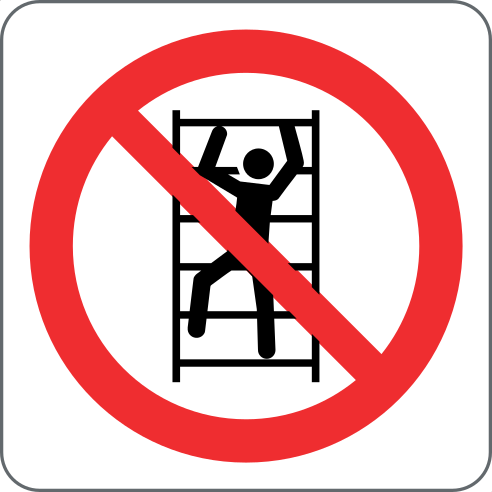
No Climbing Sign - ISO 7010 P009 Fall Protection Safety Sign
No Climbing Sign - ISO 7010 P009 Fall Protection Safety Sign
Couldn't load pickup availability
No Climbing Sign - ISO 7010 P009 Fall Protection Safety Sign
Prevent fall injuries with our professional no climbing safety signs. These ISO 7010 certified prohibition signs (P009) feature the standardized person-climbing symbol within a bold red circle with diagonal crossbar, clearly communicating that climbing on scaffolding, storage racks, fencing, structures, or equipment is strictly prohibited to prevent falls from height. Essential for warehouses, construction sites, and industrial facilities where fall protection regulations and European workplace directives mandate clear climbing prohibition protecting workers and visitors from serious fall injuries.
Heavy-duty construction provides dependable visibility and adhesion in challenging indoor and outdoor environments. Designed for immediate recognition across European facilities, helping staff and visitors understand climbing hazards in warehouses, construction sites, and industrial operations.
Key Applications:
- Warehouse storage racks and shelving systems
- Construction scaffolding and temporary structures
- Perimeter fencing and security barriers
- Utility poles and communication towers
- Industrial equipment and machinery structures
- Loading dock platforms and mezzanine
When are no climbing signs required under European fall protection regulations?
No climbing signs are required on structures where climbing creates fall hazards, including warehouse racks, scaffolding, fencing, and equipment where falls from heights exceeding 2 metres cause serious injuries. European Work at Height Regulations and workplace safety directives mandate clear climbing prohibition signage on storage systems, temporary structures, and equipment not designed for human access preventing unauthorized climbing and fall-related injuries.
What types of structures and equipment need climbing prohibition signage?
Warehouse pallet racks, industrial shelving, construction scaffolding, perimeter fencing, utility structures, loading dock equipment, and mezzanine platforms require no climbing signs. Any structure not designed as designated access equipment where climbing creates fall hazards exceeding 2 metres must display clear prohibition signage preventing unauthorized access and ensuring fall protection compliance.
How do no climbing signs improve workplace fall protection compliance?
Professional no climbing signs prevent unauthorized climbing on racks, scaffolding, and structures, reducing fall injuries from heights and ensuring fall protection regulation compliance. Proper signage supports height safety training, reinforces designated access procedures, and demonstrates regulatory compliance during workplace safety inspections and fall protection audits across European facilities.
Are no climbing signs necessary for warehouse storage racks and industrial shelving?
Yes, no climbing signs are essential for warehouse pallet racks, industrial shelving systems, and storage structures where workers may attempt climbing to retrieve materials creating serious fall hazards. European warehouse safety standards prohibit climbing on storage racks (designed for 2-12 metre heights) requiring mechanical access equipment, proper signage preventing shortcuts that cause fatal falls and rack collapses.
What size no climbing signs work best for warehouse and construction applications?
No climbing sign sizing depends on structure dimensions and viewing distances. Warehouse storage racks typically require medium signs (150x200mm or 200x300mm) for worker visibility, while construction scaffolding uses larger signs (300x400mm) for site-wide recognition. Fencing and equipment need appropriate sizing (100x150mm to 200x300mm) ensuring visibility from typical approach distances.
Can no climbing signs withstand warehouse and outdoor construction environments?
Weather-resistant no climbing signs using aluminum, rigid plastic, or industrial-grade materials provide durability for warehouse operations, construction sites, and outdoor European applications. UV-resistant inks and weatherproof construction ensure long-term visibility through warehouse operations, construction activities, temperature variations, and continuous environmental exposure across European climates.
How do no climbing signs integrate with fall protection and height safety programs?
No climbing signs coordinate with comprehensive fall protection programs, height safety training, and work-at-height procedures. Proper signage supports ladder and platform usage training, reinforces mechanical access equipment requirements, and ensures regulatory compliance while communicating clear climbing restrictions and designated access method requirements across European facilities.
What maintenance do no climbing signs require in warehouse and construction environments?
No climbing signs need regular inspection for damage, obstruction, or visibility issues during routine safety inspections. Monthly checks ensure signs remain effective in high-activity areas, while construction sites require weekly verification during active operations. Damaged signs compromise fall protection communication and must be replaced immediately maintaining climbing prohibition effectiveness.
Do no climbing signs need coordination with access equipment and training programs?
Yes, no climbing signs should be integrated with access equipment provision, ladder safety training, and work-at-height certification programs. Proper signage supports training effectiveness ensuring workers understand climbing restrictions and use provided mechanical access equipment, mobile platforms, or scaffolding for authorized height access complying with European fall protection requirements.
Order your no climbing signs today to ensure your facility provides compliant fall protection and height safety communication preventing unauthorized climbing and fall-related injuries.
ISO 7010 P009 Fall Protection Compliance
Standardized prohibition symbol P009 ensures immediate recognition across European warehouses, construction sites, and industrial facilities. Universal person-climbing design maintains consistency with European Work at Height Regulations and supports multinational fall protection programs across diverse European workplace environments.
High-Visibility Fall Hazard Design
Professional red circle with diagonal line and clear climbing prohibition symbol ensures immediate recognition at warehouse racks, scaffolding, and structures. High-contrast design maintains visibility in warehouse lighting, construction site conditions, and outdoor environments for reliable fall protection communication preventing unauthorized climbing attempts.
Warehouse & Construction Durability
Heavy-duty construction withstands warehouse operations, construction site activities, and outdoor European weather conditions. Fade-resistant inks and robust materials ensure long-term visibility through warehouse traffic, construction activities, temperature variations, and continuous environmental exposure maintaining fall protection messaging effectiveness.
Universal Height Safety Communication
Pictogram design transcends language barriers for international warehouse teams, construction contractors, and diverse facility visitors. Clear visual communication ensures climbing prohibition understanding regardless of language skills or cultural background in multinational European warehouses and construction operations.
Professional Structure Installation
Multiple mounting options including adhesive backing, mechanical fasteners, cable ties, and magnetic mounting for various structure types. Suitable for warehouse rack installation, scaffolding marking, fence mounting, and equipment labeling across warehouse, construction, and industrial settings.
European Fall Protection Applications (Copy-Paste Ready)
Warehouse Storage Rack Safety
Critical for pallet racks, industrial shelving, and storage systems (typically 2-12 metres height) where climbing to retrieve materials creates serious fall hazards and structural collapse risks. European warehouse safety standards mandate mechanical access equipment (order pickers, scissor lifts, mobile platforms) prohibiting rack climbing preventing worker falls and rack system failures from improper loading.
Construction Scaffolding Protection
Essential for construction scaffolding, temporary structures, and building access systems where unauthorized climbing on incomplete, unguarded, or unstable scaffolding creates fatal fall risks. Scaffolding designed for authorized construction workers with proper access points, guardrails, and fall protection equipment requires prohibition signage preventing public and unauthorized worker access during construction operations.
Perimeter Fencing & Security Barriers
Important for facility perimeter fencing, security barriers, and property boundaries where climbing creates fall hazards, security breaches, and trespass risks. Fencing heights (typically 2-4 metres) create fall hazards while climbing facilitates unauthorized access requiring clear prohibition signage supporting security protocols and public safety.
Utility Infrastructure & Tower Structures
Mandatory for utility poles, communication towers, and infrastructure equipment where climbing without authorization and proper equipment creates fatal fall risks and utility disruption. Utility structures (heights 5-50+ metres) require specialized climbing equipment, training, and authorization preventing public access and protecting utility workers during maintenance operations.
Industrial Equipment & Machinery
Critical for industrial equipment structures, machinery frames, and production equipment where climbing creates fall hazards, equipment damage, and operational safety risks. Equipment not designed as access structures lacks proper handholds, guardrails, and load capacity for human weight requiring prohibition signage preventing improper access and equipment-related falls.
Loading Dock & Mezzanine Protection
Essential for loading dock structures, mezzanine platforms, and elevated work areas where climbing on support structures, railings, or equipment creates fall hazards. Designated access via stairs, ladders, or platforms required with climbing prohibition on structural supports, undersides, and non-access elements preventing improper height access and fall injuries.
EU Work at Height Directive
Directive 2001/45/EC (Amending 89/391/EEC):
- Work at height defined as work where fall could cause injury
- Typically applies to heights >2 metres (varies by member state)
- Requires collective protection measures preventing falls
- Climbing prohibition signage supports directive compliance
Key Requirements:
- Prevent falls through proper equipment and procedures
- Minimize fall distances where falls cannot be prevented
- Provide adequate training for work at height
- Ensure work equipment properly maintained and inspected
- Prohibition signage preventing unauthorized height access
National Implementation Examples
United Kingdom (Work at Height Regulations 2005):
- Applies to all work at height regardless of duration
- Hierarchy: avoid, prevent, mitigate fall consequences
- Duty to prevent falls where reasonably practicable
- Suitable equipment selection based on task requirements
- Prohibition signs preventing climbing on unsuitable structures
Germany (DGUV Rule 112-198 / BetrSichV):
- Fall protection required >2 metre heights
- Scaffolding must be erected by competent persons
- Regular inspection requirements (weekly during use)
- Training requirements for work at height
- Clear signage preventing unauthorized climbing
France (Code du Travail R4323-58 to R4323-90):
- Work at height prevention priority hierarchy
- Collective protection measures prioritized
- Personal fall protection when collective measures insufficient
- Competent person supervision requirements
- Prohibition signage on non-access structures
Penalties & Consequences:
- Serious injuries/fatalities: criminal prosecution possible
- Safety violations: €5,000-€100,000+ fines depending on jurisdiction
- Enforcement notices and activity prohibition orders
- Insurance claim complications for inadequate precautions
- Reputational damage and HSE prosecution
Fall from Height Statistics
European Workplace Fatalities:
- Falls from height: 20-25% of workplace fatalities across EU
- Warehouse falls: significant contributor to logistics sector injuries
- Construction falls: leading cause of construction worker deaths
- Average fall fatality height: 3-8 metres (preventable with proper controls)
Common Climbing-Related Incidents:
- Warehouse rack climbing: falls and rack collapse injuries
- Fence climbing: perimeter security falls and impalement injuries
- Scaffolding access: unauthorized climbing causing fatal falls
- Equipment climbing: machinery falls and entanglement injuries
Why Rack Climbing is Prohibited
Structural Design Limitations:
- Pallet racks designed for vertical load distribution only
- Horizontal climbing loads create structural failure risks
- Beam connections not designed for dynamic climbing forces
- Rack sway and movement amplified during climbing
- Typical rack heights: 3-12 metres creating fatal fall potential
Fall Hazards:
- No fall protection equipment on standard storage racks
- No guardrails, handholds, or climbing protection
- Beam spacing creates fall-through hazards
- Load instability during climbing creates falling object risks
- Emergency descent impossible during emergencies
Proper Alternatives:
- Order picker machines (1-12 metre lift capacity)
- Mobile elevating work platforms (scissor lifts, boom lifts)
- Mobile platforms and rolling stairs
- Fixed access ladders with fall protection systems
- Vertical reciprocating conveyors for material access
Rack Collapse Risks
Climbing-Induced Failures:
- Lateral forces exceeding design capacity
- Beam connection failures from horizontal loads
- Column base plate failures from moment forces
- Progressive collapse from localized overloading
- Fatalities from rack collapse onto climbers and nearby workers
Material Options for European Applications:
- Rigid Plastic (2-3mm): Warehouse indoor use, 5-7 year lifespan, impact-resistant
- Aluminum (1-2mm): Outdoor construction sites, 10+ year performance, corrosion-resistant
- Adhesive Vinyl: Smooth surface mounting, warehouse racks, equipment labeling
- Cable-Tie Mounting: Fence installation, temporary structures, quick application
European Fall Protection Compliance:
- ISO 7010 P009 certified symbol for EU-wide recognition
- Work at Height Directive 2001/45/EC alignment
- National regulation compliance across member states
- Construction safety directive support
Size Options for Warehouse & Construction (Metric):
- Compact equipment labels: 100x150mm to 150x200mm
- Standard warehouse signs: 200x300mm to 250x300mm
- Large construction site warnings: 300x400mm to 400x500mm
- Custom sizing for specialized structure applications
Installation Specifications:
- Warehouse racks: mounting every 2-3 bays on visible faces
- Scaffolding: signs at ground level and elevated access points
- Fencing: every 10-20 metres on climbing-accessible sections
- Height: 1.4-1.7 metres (eye level) where structure allows
Strategic Placement for Maximum Effectiveness
Warehouse Storage Racks:
- Front and rear rack faces (visible from aisles)
- End-of-aisle positions (high visibility)
- Near common material retrieval locations
- At rack entry points and corners
- Supplementary signs every 2-3 rack bays
Construction Scaffolding:
- Ground level at base access points
- Perimeter fencing around scaffold systems
- Public-facing sides of construction sites
- Near incomplete or unguarded scaffold sections
- Temporary entrance points and construction gates
Perimeter Security:
- Regular intervals (every 10-20 metres recommended)
- Near access gates and vulnerable sections
- Areas adjacent to climbable objects (bins, vehicles)
- Public approach sides with foot traffic
- Corners and intersection points
Share