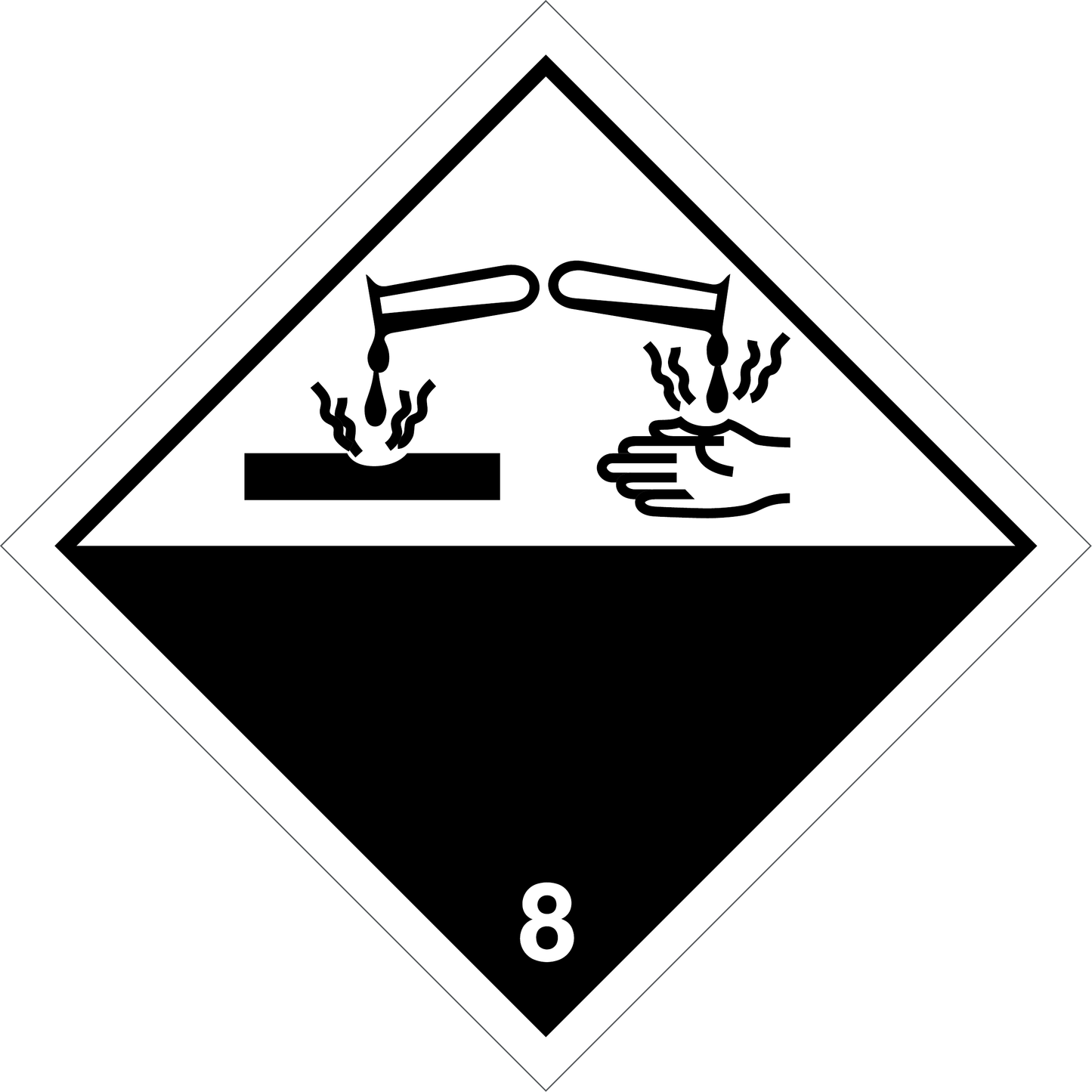
ADR sign and labels - corrosive substances
ADR sign and labels - corrosive substances
Couldn't load pickup availability
Professional ADR Corrosive Substances Labels for Class 8 Corrosion Hazards
ADR corrosive substances labels provide critical corrosion hazard identification for Class 8 materials that cause severe burns to skin and eyes and destroy living tissue on contact. These essential safety labels ensure proper recognition of acids, bases, and corrosive chemicals that cause immediate tissue damage and destroy metals, concrete, and other materials during chemical processing, metal treatment, and industrial operations.
UN Class 8 and ADR Compliance for Corrosive Material Transport
Our ADR corrosive substances labels comply with UN Model Regulations Class 8 and European ADR standards for corrosive material transport. This ensures internationally recognized corrosion symbols that communicate acid and base burn hazards effectively to transport personnel, chemical handlers, emergency responders, and medical professionals dealing with materials that cause severe skin burns and eye damage.
Chemical-Resistant Construction for Corrosive Environments
Manufactured from corrosion-resistant materials designed to withstand harsh chemical environments where corrosive substances are processed. High-contrast acid burn graphics ensure the signs stand out in complex industrial settings where corrosion hazards require immediate recognition. Quality construction maintains label integrity in demanding chemical processing and metal treatment facilities exposed to corrosive atmospheres.
Critical for Chemical Processing and Metal Treatment Industries
Strategic placement of corrosive substances labels prevents severe burn incidents by clearly identifying corrosive materials requiring specialized personal protection and handling protocols. Essential for chemical manufacturers, metal processing facilities, battery manufacturers, and logistics providers handling acids, bases, and corrosive solutions that cause immediate tissue destruction and material corrosion.
Essential for Acid and Base Manufacturing Operations
Perfect for chemical manufacturers, metal treatment plants, battery producers, water treatment facilities, and specialized transport services handling Class 8 corrosive substances. These labels support chemical burn safety compliance while preventing acid burns, eye injuries, and safety violations during corrosive material processing, metal etching, and chemical transport operations.
Universal Corrosion Hazard Communication Standards
ADR corrosive substances labels use internationally standardized acid/base symbols recognized by chemical and industrial professionals worldwide. They enhance chemical burn safety training programs and support consistent corrosion protection procedures across multinational chemical operations. Clear visual communication reduces burn risks and improves corrosive material safety effectiveness.
Precision Manufacturing for Chemical Burn Safety Applications
Each label component—from corrosion symbol clarity to acid-resistant adhesive—meets strict Class 8 and chemical safety specifications. Precision printing ensures corrosion hazard symbols remain visible throughout chemical transport and processing cycles. Quality materials maintain adhesion and legibility under demanding corrosive conditions where burn prevention is life-critical.
Free EU Shipping and Corrosive Substance Compliance Support
We offer free delivery across the European Union for all corrosive substance labeling requirements. Bulk quantities available for large chemical processing and metal treatment operations. Our team provides professional support trusted by chemical safety officers and burn prevention coordinators for Class 8 compliance requirements.
Prevent severe chemical burns and material corrosion with professional ADR corrosive substances labels meeting Class 8 international acid and base safety standards.
Technical Specifications Section:
Product Specifications:
- Classification: UN Class 8 - Corrosive substances
- Symbol: Corrosion pictogram showing hand and metal damage (black on white)
- Colors: Standard Class 8 colors (white background with black corrosion symbol)
- Material: Acid-resistant vinyl with corrosion-resistant coating
- Adhesive: Chemical-resistant permanent, acid/base resistant
- Temperature Range: Functional -20°C to +80°C (chemical processing range)
- Sizes Available: Standard ADR Class 8 label dimensions
- Durability: Acid, base, and chemical corrosion resistant
Class 8 Corrosivity Categories:
- ✓ Packing Group I - High danger (severe corrosion)
- ✓ Packing Group II - Medium danger (moderate corrosion)
- ✓ Packing Group III - Minor danger (mild corrosion)
- ✓ C1-C11 - Various corrosive substance subcategories
- ✓ CF - Corrosive substances, flammable
- ✓ CS - Corrosive substances, self-heating
- ✓ CW - Corrosive substances that react with water
Common Class 8 Corrosive Substance Applications:
Acid Manufacturing and Processing:
- Sulfuric Acid - Battery acid, metal processing, chemical manufacturing
- Hydrochloric Acid - Metal etching, pH control, chemical synthesis
- Nitric Acid - Metal processing, fertilizer production, explosives manufacturing
- Phosphoric Acid - Food processing, metal treatment, fertilizer production
- Acetic Acid - Chemical synthesis, food preservation, textile processing
- Hydrofluoric Acid - Glass etching, metal cleaning, petroleum refining
Base and Alkali Operations:
- Sodium Hydroxide - Caustic soda for soap, paper, and chemical manufacturing
- Potassium Hydroxide - Battery electrolyte, chemical processing, cleaning
- Calcium Hydroxide - Lime for construction, water treatment, chemical processing
- Ammonium Hydroxide - Cleaning solutions, chemical synthesis, refrigeration
- Lithium Hydroxide - Battery manufacturing, lubricant production
- Barium Hydroxide - Chemical synthesis and industrial processing
Battery and Energy Storage:
- Battery Acid - Lead-acid battery electrolyte solutions
- Lithium Battery Electrolytes - Corrosive electrolyte solutions
- Alkaline Battery Solutions - Potassium hydroxide battery electrolytes
- Fuel Cell Electrolytes - Corrosive solutions for energy applications
- Solar Cell Processing - Etching and cleaning solutions
- Energy Storage Systems - Corrosive materials for grid storage
Metal Treatment and Processing:
- Metal Etching Solutions - Circuit board and metal surface etching
- Pickling Acids - Steel and metal surface cleaning
- Electroplating Solutions - Metal finishing and coating processes
- Rust Removers - Phosphoric and oxalic acid solutions
- Metal Cleaners - Industrial degreasing and surface preparation
- Galvanizing Solutions - Zinc coating and metal protection
Corrosion Hazards and Burn Risks:
Primary Corrosive Exposure Risks:
- Severe Skin Burns - Immediate tissue destruction and chemical burns
- Eye Damage - Permanent vision loss and corneal destruction
- Respiratory Burns - Lung tissue damage from corrosive vapors
- Ingestion Burns - Internal organ damage from accidental swallowing
- Material Corrosion - Destruction of metals, concrete, and equipment
- Environmental Damage - Soil and water contamination from corrosive spills
Prevention and Control Measures:
- Personal Protective Equipment - Acid-resistant suits, face shields, gloves
- Emergency Equipment - Safety showers, eyewash stations, neutralizing agents
- Ventilation Systems - Corrosive vapor capture and neutralization
- Containment Systems - Acid-resistant secondary containment
- Neutralization Materials - Chemical neutralizing agents and buffers
- Emergency Procedures - Chemical burn treatment and decontamination
Industry-Specific Safety Requirements:
Chemical Manufacturing Operations:
- Process Containment - Acid-resistant piping and equipment
- Corrosion Monitoring - Equipment inspection and maintenance programs
- Emergency Response - Chemical burn treatment and acid spill procedures
- Waste Neutralization - Acid/base waste treatment and disposal
- Personnel Training - Chemical burn prevention and emergency response
- Environmental Controls - Corrosive emission control and monitoring
Metal Processing Facilities:
- Acid Handling - Safe transfer and storage of pickling acids
- Ventilation Design - Acid vapor capture and neutralization systems
- Equipment Protection - Corrosion-resistant materials and coatings
- Spill Response - Acid spill neutralization and cleanup procedures
- Worker Protection - Acid-resistant PPE and burn prevention training
- Facility Design - Acid-resistant flooring and drainage systems
Battery Manufacturing:
- Electrolyte Handling - Safe battery acid and caustic handling procedures
- Quality Control - Corrosive material testing and analysis safety
- Production Safety - Battery filling and sealing safety procedures
- Waste Management - Battery acid and caustic waste disposal
- Emergency Procedures - Battery acid spill and exposure response
- Environmental Compliance - Air and water emission control
Transport and Storage Requirements:
Packaging Requirements:
- UN Specification Packaging - Certified acid-resistant containers
- Corrosion-Resistant Materials - Packaging materials that resist chemical attack
- Leak-Proof Design - Prevent corrosive material release during transport
- Segregation Rules - Separation from metals, organic materials, and bases/acids
- Quantity Limitations - Limits on corrosive substance transport quantities
- Emergency Equipment - Neutralizing agents and spill cleanup materials
Storage Conditions:
- Corrosion-Resistant Storage - Acid-resistant tanks and containers
- Temperature Control - Maintain storage temperatures for chemical stability
- Ventilation Requirements - Prevent corrosive vapor accumulation
- Secondary Containment - Acid-resistant containment for spill prevention
- Separation Requirements - Physical separation from incompatible materials
- Emergency Access - Safety showers and neutralization equipment
Vehicle Requirements:
- Emergency Equipment - Neutralizing agents and chemical burn treatment
- Corrosion Protection - Acid-resistant vehicle components and coatings
- Ventilation Systems - Prevent corrosive vapor accumulation
- Driver Training - Specialized training for corrosive substance transport
- Emergency Contacts - Chemical burn treatment and poison control information
- Route Planning - Avoid environmentally sensitive areas
Emergency Response and Chemical Burn Incidents:
Corrosive Exposure Emergency Protocol:
- Immediate Decontamination - Flush affected areas with water for 15+ minutes
- Remove Contaminated Clothing - Prevent continued chemical contact
- Eye Irrigation - Continuous eye flushing for chemical eye burns
- Medical Assessment - Evaluate burn severity and chemical exposure
- Emergency Treatment - Appropriate medical treatment for chemical burns
- Neutralization - Use appropriate neutralizing agents if recommended
- Medical Transport - Emergency transport with chemical exposure information
Spill and Release Response:
- Area Evacuation - Clear personnel from corrosive exposure areas
- Source Control - Stop corrosive material release if safely possible
- Neutralization - Apply appropriate neutralizing agents to spills
- Containment - Prevent spread of corrosive contamination
- Environmental Protection - Prevent corrosive release to drains and environment
- Specialized Cleanup - Use acid-resistant equipment and procedures
FAQ Section:
Q: What makes a substance "corrosive" under Class 8? A: Substances that cause visible destruction or irreversible alterations to human skin tissue and/or corrode steel or aluminum at specified rates.
Q: Can acids and bases be transported together? A: No, acids and bases must be segregated as they can react violently if they come into contact, potentially causing fires or explosions.
Q: What first aid is required for corrosive substance exposure? A: Immediate and continuous water flushing for at least 15 minutes, removal of contaminated clothing, and urgent medical attention.
Q: Are there special requirements for concentrated acids? A: Yes, concentrated acids often require Packing Group I classification with the most stringent packaging, training, and emergency response requirements.
Industry Benefits and Safety Value:
Chemical Burn Prevention Benefits:
- Prevents severe burns - Eliminates acid/base exposure incidents
- Protects vision - Prevents permanent eye damage from corrosive exposure
- Saves tissue - Prevents tissue destruction and permanent scarring
- Reduces liability - Demonstrates proper corrosive substance safety
- Insurance protection - Maintains coverage for chemical burn incidents
Equipment and Facility Protection:
- Prevents corrosion damage - Protects equipment and infrastructure
- Reduces maintenance costs - Prevents acid/base damage to facilities
- Environmental protection - Prevents corrosive contamination incidents
- Process safety - Enables safe handling of corrosive materials
- Quality assurance - Protects product quality during corrosive processing
Regulatory Compliance:
- Legal requirements - Meets mandatory corrosive substance labeling
- Safety standards - Supports OSHA and chemical safety compliance
- International shipping - Ensures global corrosive material transport
- Emergency preparedness - Supports effective chemical burn response
- Professional expertise - Demonstrates advanced chemical safety knowledge
Share